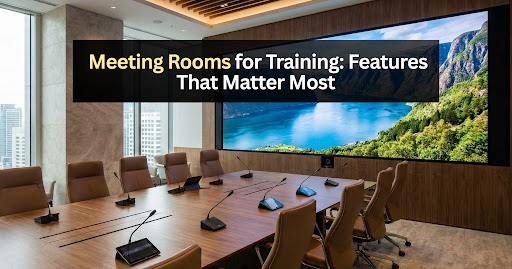
Training sessions are only as effective as the environment in which they are conducted. While content and trainers play a crucial role, the quality of the meeting room used for training significantly influences attention, engagement, learning outcomes. Businesses today increasingly recognize that not all meeting rooms are suitable for training purposes.
Whether it is employee onboarding, skill development workshops, leadership training, or certification programs, choosing the right meeting room for training ensures productivity, comfort and focus throughout the session.
Why the Right Meeting Room Matters for Training
Training sessions often run for several hours or even multiple days. Unlike short meetings, training requires sustained concentration, interaction and comfort. A poorly designed room can lead to fatigue, distraction and reduced participation.
A well-equipped meeting room designed for training supports learning flow, encourages interaction and creates a professional environment that reflects the organization’s commitment to development.
Flexible Seating and Layout Options
One of the most important features of a meeting room for training is layout flexibility. Different training formats require different seating arrangements.
Classroom-style seating works well for structured learning, while U-shaped or cluster layouts encourage discussion and group activities. A good training meeting room allows easy reconfiguration without disruption. Modern coworking spaces in Chennai often offer meeting rooms with adaptable layouts that can be rearranged based on training needs. Whether it is classroom seating for structured learning or group tables for workshops, flexibility ensures that the space supports the training objective. This adaptability is especially valuable for companies operating from coworking spaces or private offices that require multi-purpose rooms.
High-Quality Audio Visual Infrastructure
Technology plays a central role in modern training sessions. Reliable audiovisual support is essential for presentations, demonstrations and virtual participation.
Key AV features that matter most include:
- Large display screens or projectors with clear visibility
- High-quality sound systems for clear audio delivery
- Wireless presentation tools for seamless switching between speakers
- Video conferencing support for hybrid or remote participants
A meeting room with dependable AV infrastructure ensures that training runs smoothly without technical interruptions.
Comfortable Seating for Long Sessions
Training sessions often involve long hours of sitting, listening and participating. Ergonomic seating is not a luxury but a necessity.
Comfortable chairs with proper back support help reduce fatigue and keep participants attentive. Adequate spacing between seats also contributes to comfort and mobility during activities.
When participants are physically comfortable, they are more mentally engaged.
Proper Lighting and Ventilation
Lighting and air circulation directly impact concentration and energy levels. Poor lighting can cause eye strain, while inadequate ventilation can make the room feel stuffy and uncomfortable.
The best meeting rooms for training offer:
- Balanced natural and artificial lighting
- Adjustable lighting options for presentations
- Well-maintained air conditioning and ventilation systems
A fresh, well-lit environment keeps participants alert and focused throughout the session.
Acoustics and Sound Control
Clear communication is critical during training. Poor acoustics can lead to echoes, noise distractions and difficulty hearing the trainer or participants.
Training-friendly meeting rooms are designed with sound control in mind. Acoustic panels, soundproof walls and minimal external noise help maintain clarity and concentration.
Good acoustics ensure that every participant can hear and be heard without strain.
Reliable Internet Connectivity
Internet access is essential for research, demonstrations, cloud-based tools and online assessments. Slow or unstable connectivity can disrupt training flow and reduce effectiveness.
A professional meeting room for training should provide:
- High-speed Wi-Fi
- Stable connections for multiple devices
- Support for video streaming and online platforms
Meeting rooms in professional coworking spaces typically offer high-speed Wi-Fi capable of supporting multiple devices simultaneously. This is particularly useful for digital training programs, workshops and certification sessions. Reliable internet connectivity supports modern learning methods and digital collaboration.
Whiteboards and Interactive Tools
Training is most effective when participants can actively engage with the content. Whiteboards, flip charts and interactive screens allow trainers to explain concepts visually and encourage participation.
These tools support brainstorming, problem-solving and collaborative exercises. They also make sessions more dynamic and interactive.
A training meeting room should be equipped with tools that encourage learning beyond slides.
Accessibility and Convenience
Accessibility is an often-overlooked but essential feature. A training meeting room should be easy to locate and accessible for all participants.
Important considerations include:
- Elevator and ramp access
- Nearby restrooms
- Clear signage and reception support
- Convenient parking or public transport access
Accessibility ensures inclusivity and minimizes logistical stress for attendees.
On-Site Support and Services
Smooth training sessions require more than just a room. On-site support can make a significant difference.
Support services may include:
- Technical assistance during sessions
- Reception and check-in support
- Refreshment and catering options
- Clean and well-maintained facilities
Having support staff available allows trainers to focus on delivering quality content without distractions.
Professional Ambience That Encourages Learning
The overall ambience of a meeting room influences how participants perceive the training. A professional, clean and well-organized space creates a positive learning mindset.
Neutral colors, clutter-free design and thoughtful interiors contribute to a calm and focused environment. A well-designed meeting room reflects professionalism and commitment to quality training.
Scalability for Different Group Sizes
Training needs often change. A meeting room that can accommodate different group sizes offers long-term value.
Scalable meeting rooms allow businesses to host:
- Small team training sessions
- Medium-sized workshops
- Larger corporate training programs
This flexibility supports evolving organizational needs without requiring frequent venue changes.
Final Thoughts
Choosing the right meeting room for training is a strategic decision that impacts learning effectiveness, engagement and overall outcomes. Features such as flexible layouts, advanced AV support, comfort, acoustics and accessibility are not optional but essential.
Businesses that invest in well-equipped meeting rooms for training create environments where learning thrives. The right space supports not only knowledge transfer but also collaboration, confidence and growth.
A thoughtfully designed training meeting room turns every session into a productive and professional experience.