Legal Checklist Before Renting Office Space in Chennai – A Guide

Chennai’s thriving business environment is attractive for startups, IT firms, consultancies, and more. Office locations in strategic business districts like OMR, Guindy, and Teynampet are highly sought after. However, to leverage Chennai’s potential, entrepreneurs must navigate a complex web of legal factors that govern commercial real estate. This guide breaks down what you need to know and do—step by step—for office space for rent in Chennai before signing on the dotted line.

Why Legal Due Diligence Matters?

Legal due diligence in leasing protects you from:

  • Ownership disputes: Who owns or has legal authority over the rental space?
  • Zoning violations: Whether your intended business is legally permitted.
  • Unclear lease terms: Ambiguities can lead to hidden costs or unfair obligations.
  • Liability gaps: For damages, liabilities, or emergencies.
  • Compliance failures: Ignorance of local laws can mean hefty fines or shutdowns.

Investing time upfront to validate legal aspects prevents bigger problems and expenses later.

Key Legal Considerations

3.1. Title and Ownership Verification
  • Land title check: Request title deeds or Extracts from the Registrar’s office (Patta/SRO records).
  • Power of Attorney (PoA): If the person leasing is a power holder, verify the PoA’s authenticity and scope.
  • Chain of title review: Ensure past ownership transfers were legally executed and registered.
  • Encumbrance certificate: Indicates whether there are outstanding loans, mortgages, or charges.

Why it matters: You must rent from the actual legal owner or authorized agent. Any ownership irregularity can invalidate your lease or threaten eviction.

3.2. Authorized Use under Zoning Laws
  • Confirm same‑use categorization: Office spaces must be categorized as “Commercial – Office” under Chennai Metropolitan Development Authority (CMDA) or Chennai Corporation zoning.
  • Check if additional approvals are needed—e.g., for server rooms, data storage, or specific professional services.

Why it matters: Operating a business in a non‑zoned property is an offense punishable under the Chennai Metropolitan Development Authority Act—your business can be served a stop notice or penalty.

3.3. Lease Agreement Essentials

A robust lease agreement is the backbone of a smooth relationship. Key clauses should include:

  • Identification: Names, addresses, and contact info of the lessor and lessee.
  • Premises description: Exact address, floor plan, built‑up area.
  • Use clause: Define permissible business use (e.g., “IT consultancy and related offices”).
  • Term and commencement date: Clarity on lease length, start date, and rent commencement.
  • Rent & escalation: Monthly rent, escalation percentage (e.g., 5% annual), and rent review schedule.
  • Security deposit: Amount, payment schedule, and refund conditions.
  • Common Area Maintenance (CAM): Who pays (tenant or landlord)? How are costs allocated?
  • Utilities & services: Who bears electricity, water, sewer, security, cleaning, waste disposal?
  • Sub‑letting/license: Allowed or restricted? Define terms.
  • Alterations/licensee fit‑out: What can be done, with whose consent, and responsibility for restoration.
  • Assignment: Can the tenant assign rights to another party?
  • Insurance & indemnity: Who insures what (fire, renter’s insurance, third‑party liability)?
  • Force majeure: Sample events, and rights in fire, flood, pandemic, or labor unrest.
  • Termination/exit: Notice period, penalties, restoration obligations.
  • Dispute resolution: Jurisdiction (Civil Court, Chennai), or arbitration venue.
  • Stamp duty & registration: Mandatory under Tamil Nadu Registration Act for 11+ month leases; landlord/tenant liability breakdown.

A lawyer’s review during drafting ensures that clauses don’t unfairly favor the landlord.

3.4. Deposit and Rent Terms
  • Security deposit: Typically 2–6 months’ rent; ensure clarity on whether interest is paid, and refund procedure at lease-end.
  • Rent escalation: Fixed increase (e.g., 5%), or tied to index rates (CPI, WPI).
  • Built-in utilities/included services: Some landlords offer bundled packages; clarify if rent includes them or if they are billed separately.
  • GST implications: India’s Goods and Services Tax (18%) applies to commercial leases for all lease terms longer than 11 months; check invoice compliance.
3.5. Maintenance, Repairs & CAM Charges
  • CAM definition and scope: Which spaces are included (corridors, lobbies, elevators, parking)?
  • Billing method: Flat, prorated per square foot, or based on occupancy numbers.
  • Repairs vs replacements: Landlord restores structural faults; tenant manages wear-and-tear; define responsibility boundaries.
  • Preventive maintenance rights: The Landlord should provide written notices and timelines.
  • Inspection schedule: Collaborative inspections help maintain transparency.
3.6. Fit-Out, Alterations & Renovations
  • Prior written approval: Document the technical scope and style before executing works.
  • Approved vendors: Include architect, decorator, or structural engineer registrations.
  • Compliance approvals: Register works with fire safety authorities and electrical boards.
  • Demobilization: Tenant is responsible for returning premises to original form—attention to paint, partitions, cabling, and HVAC.
  • Third‑party liabilities: Contractor damages or injuries must be insured and indemnified by the tenant.
3.7. Insurance Responsibilities
  • Landlord’s insurance: Typically covers building structure (fire, flood, earthquake).
  • Tenant’s obligations: Contents insurance (computers, furniture), public liability coverage (~₹50–100 lakh).
  • Joint/co‑insurance arrangements: Some leases require the tenant to share the cost of building insurance.
  • Policy compliance: Insurers may mandate waiver of subrogation, limits on types of occupancies, or restrictions on equipment use.
3.8. Term, Renewals & Exit
  • Initial term: Commonly 3–5 years; professionalism demands clarity on whether the breakup/merger of tenants impacts the lease.
  • Renewal rights: Optional or automatic? Typically guaranteed renewal if rent is not in arrears, subject to fresh escalation.
  • Notice periods: Usually 3–6 months’ notice for exit or non-renewal. Late cancellation fees may apply.
  • Exit cleaning & make-good obligations: Must be documented—modular offices, raised floors, nets, fire, structural changes, voids.
  • Claim settlement timeline: How long landlord have to raise a claim for damages or unpaid dues?
3.9. Legal Compliance & Licensing

Before moving in, ensure:

  • Trade license: From Greater Chennai Corporation; renewal process, fees, and required documents.
  • Fire NOC: From the Fire Safety Department; especially needed for multi-floor offices.
  • Shop & Establishment Act: Registration of the office under this Act (also covers contract labor, holidays, working hours).
  • GST registration: If annual turnover is ₹20 lakh or more (₹10 lakh for special category states).
  • Environmental/NOC approvals are: for industrial-like operations (e.g., print shop, food service, chemical storage).
  • Lift licence and elevator safety certificate: Periodic certifications must be in force.
  • Electrical/ESCOM compliance: Following Tamil Nadu Electricity Board regulations for commercial consumption.
  • Disabled-friendly & building accessibility standards: According to the Rights of Persons with Disabilities Act, 2016.
3.10. Dispute Resolution & Governing Law
  • Jurisdiction: Usually Chennai courts; specify Civil Court or Small Causes Court.
  • Arbitration clause: Use ISCLA rules or the Indian Arbitration Act, including seat (Chennai), arbitrator panel, time limits.
  • Mediation-first requirement: Some leases call for conciliation before moving to court or arbitration.
  • Attorney fees & recovery: Who bears legal costs, and is entitled to recovery of collection costs?
  • Latent defect clause: Addresses unforeseen structural or major defects emerging post-possession.

Checklist Summary Table

No.Legal ItemAction Required
1Title & OwnershipReview deed, PoA, encumbrance certificate
2Zoning & Authorized UseConfirm CMDA/Corporation permissions and declare usage
3Lease AgreementEnsure robust drafting, fair rent escalation, renewal, fit-out, and exit clauses
4Rent & DepositNegotiate deposit size, escalation mechanism, GST treatment
5CAM & MaintenanceClearly define maintenance scope, billing, and repair responsibility
6Fit‑Out & AlterationsGet landlord approvals, build to code, define responsibility at exit
7InsuranceValidate landlord and tenant insurances, including public liability
8Term, Renewals, ExitFix notice period, exit obligations, and claim timeline
9Legal Licensing & ApprovalsTrade, fire NOC, Enter & Establish, GST, ESCOM, accessibility certificates
10Dispute ResolutionAgree on jurisdiction, arbitration mechanism, and cost recovery

Best Practices & Common Pitfalls

Best Practices
  • Engage legal & real‑estate experts: A specialist landlord‑tenant lawyer and real‑estate consultant help catch hidden risks.
  • Early compliance checks: Secure a trade license, fire NOC, and occupancy certificate before move‑in.
  • Document verbal agreements: Any landlord promises must be written into the lease or accompanying schedules.
  • Perform a detailed inspection: Take date‑stamped photos or videos to record pre‑handover conditions.
  • Periodical rent comparison: Compare local market rents annually to support negotiation during renewal.
  • Maintain a maintenance log: Record repairs, preventive work, and related expenses.
🔴 Common Pitfalls
  • Unregistered lease: Leases over 11 months require mandatory registration—unregistered ones are unenforceable in court.
  • Ambiguous escalation clause: Vague wording like “market rent” without a formula creates room for conflict.
  • Unauthorized alterations: Even innocuous-looking cabling, interior glass walls, or false ceilings may be objectionable to landlords.
  • Underinsured premises: Too little or zero insurance exposes tenants to FULL potential losses.
  • Ignoring hidden costs: Parking fees, loading dock usage, security deposits, or electricity hike clauses can surprise you.
  • Premature exit barriers: A seemingly great lease with heavy exit penalties can trap you financially.

Why You’d Find the Best Office Space for Rent in Chennai Here

When it comes to finding the best office space for rent in Chennai, location matters—but so does surety. Our ongoing market insights help you:

  • Discover fully‑compliant offices with proper documentation.
  • Access rental spaces pre‑evaluated for everything from zoning to fit‑out readiness.
  • Compare lease terms side‑by‑side based on legal and cost transparency

That way, your business can focus on productivity, not paperwork.

Conclusion

Renting office space in Chennai isn’t just about selecting an address or negotiating rent—it’s about ensuring every legal foundation is firmly in place. From title search and zoning verifications to compliant leases, fit‑out permissions, and local licensing, each step plays a key role in your business’s stability and credibility.

Treat this legal checklist as a roadmap before you sign. And as your trusted partner in Chennai’s services sector, we’re here to assist—whether you require documented leases, compliance guidance, or help negotiating transparent terms.
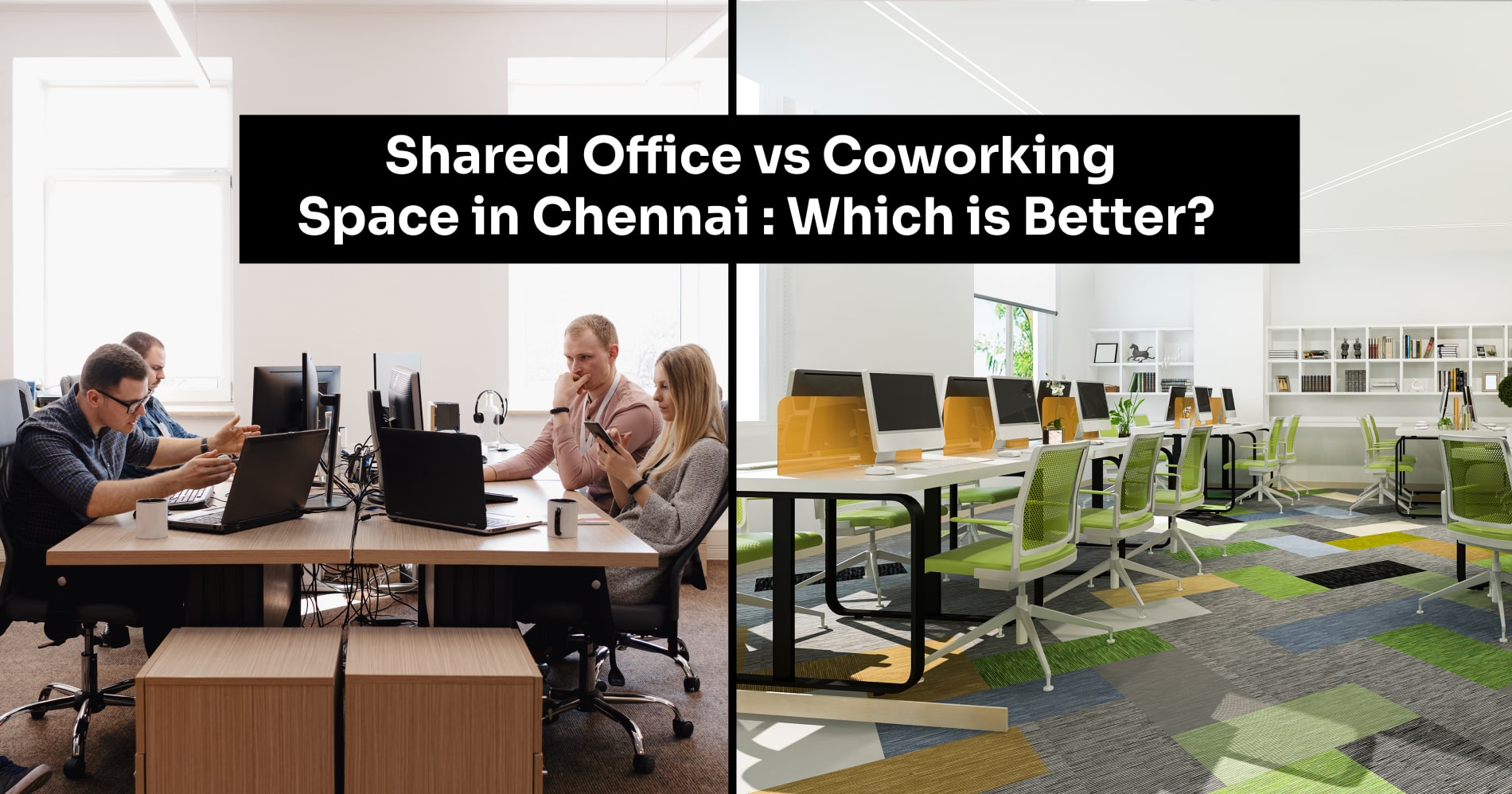

Shared Office vs Coworking Space in Chennai : Which is Better?

In today’s fast-paced business world, the dynamics of workspaces are rapidly evolving. As businesses scale and entrepreneurs launch new ventures, the need for flexible office spaces has grown. In metropolitan cities like Chennai, a large number of options have emerged, offering flexible workspaces that cater to various professional needs. The two most popular choices among professionals are shared office spaces and coworking spaces.

But with so many choices, how do you determine which one best suits your needs? Whether you’re a freelancer, small business owner, startup founder, or even an established company looking to expand or downsize, understanding the differences between shared offices and coworking spaces is crucial.

In this comprehensive guide, we will explore both workspace options, weigh their pros and cons, and help you make an informed decision about which one is better for your business needs in Chennai.

What is a Shared Office?

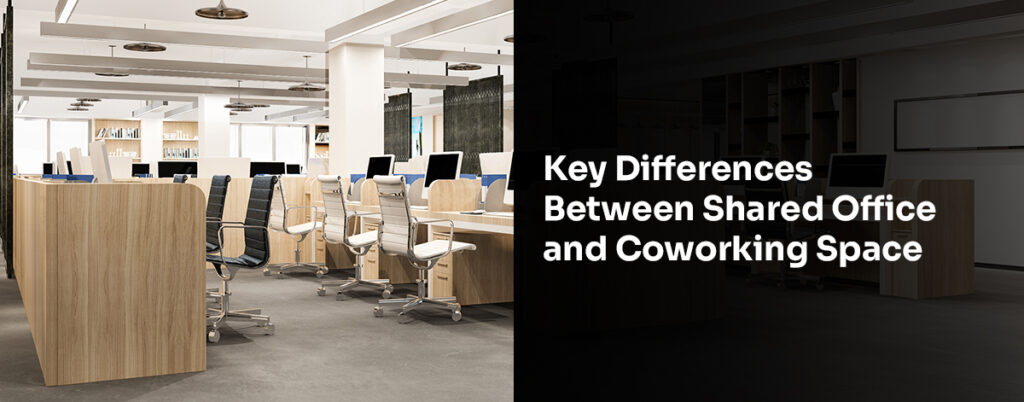
A shared office refers to a workspace where different businesses or individuals share a common office environment. Typically, these spaces are equipped with essential office infrastructure, such as desks, chairs, internet access, and printers, but are not dedicated to any specific individual or company. The key differentiator is that it offers private office space within a larger shared setting. While you may have your own desk or small office, you share facilities with other businesses.

Shared offices offer a certain level of privacy while still being part of a larger office community. This setup often appeals to businesses that want a balance of flexibility and privacy without the commitment of a traditional office lease.

Key Features of Shared Office Spaces:

  • Private offices or desks within a shared environment
  • Access to essential office infrastructure (internet, printing, etc.)
  • Shared conference rooms and common areas
  • Flexible lease terms (typically monthly)
  • Lower cost than a dedicated office

Pros of Shared Office Spaces:

  • Cost-Efficient: Shared offices generally cost less than renting out an entire office, making them an affordable option for small businesses and startups.
  • Privacy: If your work requires privacy but you still want to avoid the long-term commitment of a traditional office, shared offices provide a solution.
  • Networking Opportunities: While you may have more privacy than in coworking spaces, you’re still within a community of professionals that can help expand your network.
  • Flexibility: Many shared offices offer month-to-month leases, which allows your business to adapt quickly to changing needs.

Cons of Shared Office Spaces:

  • Limited Customization: The space is typically less customizable than a private office, as the decor and layout are often pre-determined.
  • Limited Interaction: While you’re still in a shared environment, you don’t necessarily have as much interaction with other professionals, which can limit collaboration opportunities.
  • Noise Levels: Shared office spaces can get noisy, especially when several businesses or individuals are working in the same room.

What is a Coworking Space?

A coworking space is a type of shared office environment that promotes collaboration and community. These spaces often feature open layouts with flexible seating arrangements and hot desks, encouraging interaction between individuals from different companies and industries. Unlike shared offices, coworking spaces prioritize creating a collaborative environment with the intention of fostering networking, innovation, and synergy among its members.

Coworking spaces usually provide more than just a desk and internet access—they offer additional amenities, such as community events, workshops, and social areas, all designed to encourage collaboration and professional growth.

Key Features of Coworking Spaces:

  • Open floor plans with hot desks or dedicated desks
  • Shared meeting rooms and collaboration zones
  • Networking events and workshops
  • Access to amenities like coffee, snacks, and lounges
  • A dynamic environment conducive to creativity and interaction

Pros of Coworking Spaces:

  • Community and Networking: Coworking spaces foster collaboration between different professionals, making it easier to network and even find business partners or clients.
  • Flexibility: Many coworking spaces offer flexible memberships, allowing you to pay for what you need, whether it’s a dedicated desk, hot desk, or a private office.
  • Creative and Dynamic Environment: Coworking spaces are known for their vibrant and creative atmosphere, which can inspire new ideas and approaches to business.
  • Access to Resources: Many coworking spaces provide valuable resources like mentorship, workshops, and events that can help boost your business.

Cons of Coworking Spaces:

  • Less Privacy: Since most coworking spaces feature open layouts, privacy can be limited. This may not be ideal for individuals or teams that need a quiet, isolated environment to focus.
  • Noise and Distractions: The collaborative nature of coworking spaces can lead to higher noise levels, which may disrupt concentration and productivity.
  • Less Control Over Space: In a coworking space, you’re typically working within a shared area, which means you have less control over how the space is arranged and used.

Key Differences Between Shared Office and Coworking Space

Now that we have a basic understanding of both shared offices and coworking spaces, let’s dive into their differences. Understanding these distinctions will help you decide which workspace is more suited to your business.

1. Privacy:
  • Shared Office: Shared offices offer more privacy than coworking spaces. You get your own private office or desk, allowing you to close the door when needed.
  • Coworking Space: Coworking spaces tend to have open layouts, making privacy more limited. While some coworking spaces offer private offices, most involve shared, open areas.
2. Cost:
  • Shared Office: Shared office spaces are generally more affordable than private offices, but they tend to be more expensive than coworking spaces. The cost can vary based on location, size, and the level of privacy.
  • Coworking Space: Coworking spaces are typically more budget-friendly, especially for freelancers or small teams. Memberships can be flexible and scalable based on your needs.
3. Flexibility:
  • Shared Office: Shared offices provide flexibility in terms of lease duration. You can choose month-to-month or longer contracts depending on your business needs.
  • Coworking Space: Coworking spaces are highly flexible with various membership plans, such as hot desks (pay per day), dedicated desks (assigned space), and private offices.
4. Community:
  • Shared Office: While shared offices allow you to interact with other professionals, the focus is on privacy rather than community. There is less interaction compared to coworking spaces.
  • Coworking Space: Coworking spaces thrive on community and collaboration. You are encouraged to network and engage with others, creating opportunities for partnerships and business development.
5. Amenities:
  • Shared Office: Shared offices provide basic amenities, such as high-speed internet, printers, and meeting rooms. Some may also offer extras like coffee, but amenities are usually limited.
  • Coworking Space: Coworking spaces offer a wider range of amenities, including community events, workshops, and access to professional development resources. These spaces often come with additional perks like free snacks, beverages, and even fitness centers.
6. Work Environment:
  • Shared Office: Shared offices tend to offer a more formal, traditional work environment with fewer distractions. It’s more suitable for businesses that need focused work and less social interaction.
  • Coworking Space: Coworking spaces are vibrant, collaborative, and informal. The work environment is ideal for those who thrive in creative and social settings.

Which is Better for Your Business in Chennai?

When choosing between a shared office or a coworking space in Chennai, several factors need to be considered:

  • Type of Business: If your business requires privacy, confidentiality, or specific tools and equipment, a shared office may be the better option. On the other hand, if your work is creative or collaborative, or if you’re looking to network with like-minded professionals, a coworking space could be more beneficial.
  • Budget: If you have a limited budget and need flexibility, coworking spaces in Chennai often offer more affordable solutions. Shared offices can be pricier but offer more privacy, which may be worth the extra cost.
  • Company Size: Small businesses or freelancers may find coworking spaces ideal because of the opportunities for networking and flexibility. Larger teams or companies with confidential work may lean toward shared office spaces.
  • Work-Life Balance: If your business values a healthy work-life balance and a sense of community, coworking spaces provide more opportunities for social engagement and collaboration, potentially helping reduce work-related stress.
Conclusion

In Chennai, both shared offices and coworking spaces offer unique advantages and are great options for businesses looking for flexible, cost-effective office solutions. Shared offices tend to provide more privacy and are suited for businesses that prioritize quiet and independent work. On the other hand, coworking spaces are perfect for startups, freelancers, and businesses looking to network, collaborate, and work in a more dynamic and vibrant environment.

The key to making the right choice lies in understanding your business needs—whether it’s privacy, community, flexibility, or cost-effectiveness. By evaluating these factors, you’ll be able to find the ideal workspace in Chennai that best fits your business goals.

The Rise of Coworking Culture in Chennai’s Tech Corridors

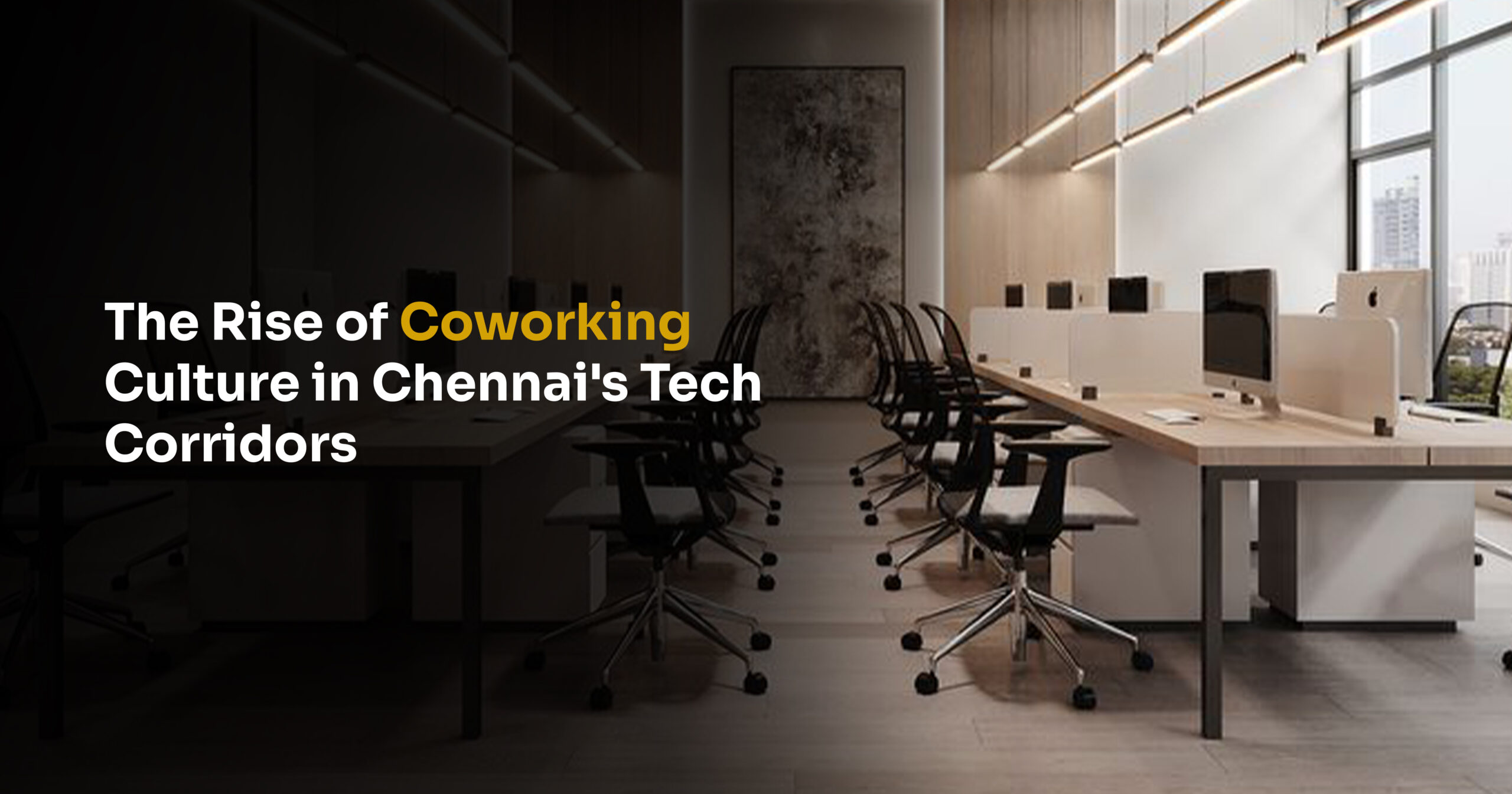
Chennai—Tamil Nadu’s vibrant capital—has evolved into a major tech hub in India, with bustling zones such as OMR (Old Mahabalipuram Road), KK Nagar, Anna Salai, Mount Road, Anna Nagar, and Guindy. This transformation is closely tied to the emergence of a dynamic coworking culture, which supports innovation, scalability, and collaboration.

From solopreneurs and startups to SMEs and corporate satellite teams, the use of Coworking spaces in Chennai has surged. Why? Because they offer flexibility, cost-effectiveness, vibrant ecosystems, and infrastructural convenience. In this article, we explore Chennai’s coworking space wave, its relevance to tech professionals and businesses, and its future trajectory.

Why Chennai’s Tech Landscape Favors Coworking ?

a) Tech Boom & Talent Demands

With global players like Accenture, TCS, Zoho, and increasing startup activity, Chennai demands flexible office solutions that can scale with growth.

b) Rising Lease Costs & Short-Term Projects

Premium locations like OMR and Guindy have steep lease rates. Coworking allows businesses to avoid long-term leases, with month-to-month or daily plans.

c) Desire for Collaboration & Innovation

Need to network, access mentors, collaborate or hire agile talent? Coworking spaces are natural incubators for that synergy.

d) Government Support for Startups

Tamil Nadu’s startup initiatives, government incubation programs, and policies supporting entrepreneurship are percolating into coworking adoption.

Key Benefits of Coworking for Businesses & Entrepreneurs

BenefitDescription
Cost EfficiencyOnly pay for space you use—desk or private cabin—no maintenance overhead.
Scalability & FlexibilityAdd seats or scale down based on project or hiring cycles.
Amenities IncludedHigh-speed Wi‑Fi, meeting rooms, printer access, pantry, reception—all included.
Community NetworkingMeet collaborators, mentors, investors, and talent within your space.
Prime LocationsGet presence in top tech corridors without high rent.
Lifestyle PerksEvents, workshops, wellness zones boost morale and well-being.

These all make coworking especially appealing to consultancies, creative agencies, software houses, and even remote teams.

Coworking Hubs Leading the Way in Chennai

The Executive Zone – Multiple Locations

As your own brand, The Executive Zone offers meticulously designed spaces in OMR, Anna Nagar, and Guindy. Amenities include private cabins, open desks, meeting rooms, lounge areas, and event facilities—geared toward tech professionals and businesses.

Awfis (Anna Nagar, OMR, T Nagar)

A national player known for its consistency, flexible plans, expertise in setup, and corporate-level amenities.

Regus (Guindy, Tidel Park)

Offers well-branded, professional-grade coworking with business-class reception, ready-to-use offices, and global access.

Beam & CoLabs (OMR)

Specialized in entrepreneurship and scale-ups; strong events and founder-centric programs.

Indiqube (OMR, Pallikaranai)

Focuses on robust tech infrastructure, ISO-certified security, conference halls, and enterprise-level compliance.

Success Stories from Chennai-Based Companies

MindTech Analytics

A small AI startup that began as a two-person team in a coworking cabin at The Executive Zone. Within six months, they expanded to hire four additional developers and clients, all without shifting locations.

DesignFlow Studio

This UX/UI consultancy started at Awfis, benefiting from design-focused workshops and hiring local creative interns. Patiently they grew into a 12‑person team, now occupying a private floor.

NHS Ventures

A healthtech initiative incubated at Indiqube, working with medical colleges in Chennai. They launched two pilot programs across hospitals in under a year.

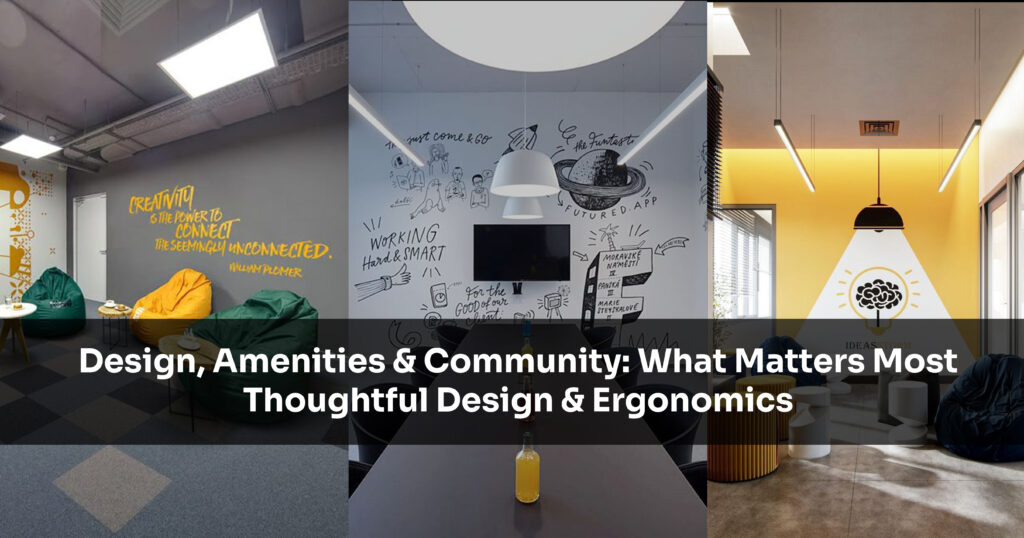
Design, Amenities & Community: What Matters Most

Thoughtful Design & Ergonomics

  • Natural light, open layouts, quiet zones
  • Ergonomic chairs, sit-stand desks, breakout lounges
  • Focused areas for concentration and comfort

Tech Infrastructure

  • High-speed fiber internet
  • Business-grade power backup
  • Secure, encrypted networks and advanced CCTV systems

Supportive Amenities

  • Well-stocked pantries with tea, coffee, snacks
  • Reception and front-desk services
  • Meeting rooms equipped with video-conferencing

Community & Events

  • Networking events, pitch nights, and masterclasses
  • Mentorship hours with finance, legal, or HR experts
  • Health & well-being sessions: yoga, mindfulness
  • Casual socials: from movie nights to game zones

Challenges & How to Overcome Them :

a) Noise & Distractions

Choose silent zones or cabin spaces when focused work is required.

b) Community Fit

Vetting the community is crucial—breakeven depends on synergy more than cost.

c) Scale-In Challenges

Ensure that providers like The Executive Zone allow seamless upgrades from desk to cabin to private office without relocation delays.

d) Data Security

Tech teams should verify infrastructure compliance, backup protocols, and NDAs when handling sensitive client data.

Future Outlook: Hybrid Work & Beyond

Rise in Hybrid Models

Companies are opting for hub-and-spoke models—headquarters in metro cities, satellite teams in coworking hubs like The Executive Zone in Chennai, fostering better work-life balance.

Virtual Offices & Distributed Teams

Services like virtual addresses, flexible meeting spaces, and on-demand day passes empower businesses that are fully remote.

Integration with Incubators/Accelerators

Many coworking operators now host accelerators, industry roundtables, and coaching that support early-stage growth.

Sustainability & ESG Focus

Green certifications, shared energy systems, plant-rich interiors, and cleanup drives are becoming standard.

Conclusion: Seizing the Coworking Opportunity

The coworking revolution in Chennai’s tech corridors is more than a trend—it’s a strategic evolution for businesses and entrepreneurs across industries. Coworking offers superior flexibility, cost solutions, community potential, and infrastructure—without the commitment of traditional offices.

For startups, SMEs, consultants, freelancers, or remote teams, coworking unlocks growth, experimentation, and success. If need be, choose spaces like The Executive Zone that deliver premium experience, seamless scale-up paths, and community-first environments.

Take the leap today:

  • Visit a coworking hub near OMR, Anna Nagar, or Guindy
  • Attend a coworking open-house or virtual tour
  • Choose cobạs that support your business life

At The Executive Zone, we are committed to helping Chennai’s business community thrive. Whether you’re a bootstrap startup or a scaling enterprise, coworking is no longer optional—it’s essential.

Are you ready to elevate your workspace and join Chennai’s coworking revolution?  Feel free to get in touch, book a tour, or request your free workspace consultation today!

The Hot Desk Dilemma: Why Flexible Seating Clashes with Human Habits

It’s 2025, and the workplace is more dynamic than ever—or so we’re told. Hot desking, the poster child of flexible seating, promises a revolution: no assigned desks, maximum adaptability, and a vibrant, collaborative vibe. Companies tout it as a cost-saving, productivity-boosting marvel, perfectly suited to hybrid work’s rise. Yet, dig into the reality, and a curious pattern emerges: despite the hype, many employees quietly claim the same desk day after day. Research backs this up, revealing a disconnect between the ideal of flexibility and the human instinct for routine. So, what’s really going on with hot desking in 2025? Let’s unpack the struggle, the evidence, and what it means for businesses today.

The Hot Desk Dream: Flexibility Unleashed

Hot desking burst onto the scene decades ago, inspired by naval “hot racking”—sailors sharing bunks in shifts to save space. By the 1990s, it morphed into an office strategy to optimize real estate in pricey markets. Fast forward to March 25, 2025, and it’s a cornerstone of the hybrid workplace. The pitch is irresistible: employees pick any available desk each day, fostering collaboration, reducing unused space, and slashing costs by up to 30%, according to industry estimates. No more half-empty offices with nameplates gathering dust—hot desking is the agile answer to a workforce that’s in the office part-time.

The appeal isn’t just financial. Advocates argue it breaks down silos, sparks creativity, and keeps things fresh. Imagine a marketer brainstorming with a developer they’d never meet in a fixed-seat world, or a team pivoting desks to suit a project’s vibe. In theory, it’s a win-win: companies save money, employees gain freedom. A 2023 survey from Future Forum found collaboration and camaraderie top the list of reasons employees come to the office—hot desking seems tailor-made to deliver.

The Reality Check: Creatures of Habit

Here’s where the story gets messy. Despite the buzz, research and anecdotal evidence suggest hot desking doesn’t always live up to its free-spirited billing. A 2018 study by Leesman, a workplace analytics firm, found that while 70% of employees in flexible seating environments appreciated the variety, a significant chunk—around 40%—gravitated to the same spot daily when possible. Fast forward to 2025, and this trend holds. A 2024 report from Gensler, analyzing hybrid workplaces, noted that even in hot-desk setups, employees often “unofficially reserve” desks by arriving early, leaving personal items, or subtly nudging coworkers away.

Why? Humans crave predictability. Behavioral science backs this: routine reduces cognitive load, letting us focus on work rather than logistics. In a hot-desk world, finding a seat can feel like a daily scavenger hunt—stressful, not liberating. Employees cite practical reasons too: proximity to power outlets, good lighting, or a quiet corner trumps randomness. A UK office worker told The Guardian in 2023, “I’ll fight for my spot by the window. It’s not about the view—it’s the Wi-Fi signal.” By 2025, with hybrid schedules solidifying, many treat their “favorite” desk as a home base, even if it’s not officially theirs.

The Productivity Paradox

Hot desking’s champions say it boosts productivity by mixing teams and sparking ideas. But the evidence is mixed. A 2013 Gensler study of 90,000+ knowledge workers found focus—not collaboration—was the biggest driver of workplace effectiveness. Open-plan hot-desk environments, with their chatter and movement, often undermine that. By 2025, this tension is sharper: hybrid workers, juggling remote and in-office days, crave stability when they’re on-site. Sitting at the same desk, even unofficially, lets them settle in fast—no fiddling with unfamiliar monitors or hunting for a charger.

Yet, there’s a flip side. When hot desking works, it shines. A 2024 Spacebring report found that 60% of coworking space users in flexible setups reported higher collaboration rates, especially in creative fields. The trick? Intentional design. Spaces with varied zones—quiet pods, communal tables, standing desks—let employees match their seat to their task. Without that, the “flexibility” feels chaotic, and the same-desk habit becomes a coping mechanism.

The Social Angle: Connection vs. Isolation

Hot deskings social promise is compelling: sit next to new people, build relationships, and ditch the departmental bubble. In 2025, with remote work eroding watercooler moments, this matters more than ever. A Future Forum survey from 2024 found 78% of employees value in-person collaboration—hot desking could be the glue. But here’s the rub: if everyone claims “their” desk, that mixing doesn’t happen. Teams end up in self-made silos, and the newbie who doesn’t know the unwritten rules sits alone by the printer.

Worse, the lack of ownership can disconnect people from the company. Danish furniture CEO Knud Erik Hansen told Quartz in 2023, “A desk is a sign of belonging.” In 2025, as hybrid work blurs office culture, that rings true. Employees who can’t personalize a space—or who lose “their” spot—may feel like nomads, not team members. A 2024 Deskbird study found 45% of hot-desk users missed the stability of a fixed seat, hinting at a deeper emotional cost.

The Tech Factor: Enabler or Enforcer?

Technology could solve the hot-desk struggle—or make it worse. By 2025, desk-booking apps like Envoy and Officely are standard, letting employees reserve spots in advance. Sensors track occupancy, and AI suggests optimal seats based on schedules. This should curb the same-desk scramble, right? Not quite. A 2024 OfficeRnD report found 50% of users still pick the same desk when booking, bypassing the system’s intent. Why? Familiarity trumps algorithms. Plus, tech glitches—spotty Wi-Fi, incompatible docks—turn flexibility into frustration.

On the flip side, smart tech can nudge behavior. Companies like WeWork use real-time maps to highlight underused areas, encouraging variety. A 2025 Twilio survey found 89% of leaders see personalization as a key to workplace success—tech could tailor hot desking to individual needs, if employees buy-in.

The Cost Equation: Savings vs. Satisfaction

For businesses, hot desking’s financial case is ironclad. With hybrid work slashing office attendance—JLL predicts 30% of office space will be flexible by 2030—why pay for empty desks? Hot desking cuts real estate costs, especially in urban hubs where rents soar. A 2024 Instant Group analysis pegged flexible space growth at 15% annually, driven by this logic. But savings come with a catch: employee pushback. A 2023 Teem study found 40% of workers disliked hot desking’s unpredictability, and that sentimentlingers in 2025. If staff dread coming in, attendance drops—ironic for a strategy meant to optimize space.

The Health and Hygiene Hangover

OVID, hot desking carries baggage. Shared desks were once virus hotspots, and while 2025’s health crisis has eased, cleanliness matters. A 2024 Yarooms report found 55% of employees want guaranteed sanitation between users—yet many hot-desk setups lag. The same-desk habit doubles as a hygiene hack: if it’s “my” spot, I know who’s been there. Without robust cleaning protocols, flexibility feels risky, not freeing.

Making Hot Desking Work in 2025

So, is hot desking doomed? Not quite. The struggle is real, but it’s fixable. Here’s how businesses can bridge the gap between theory and reality:

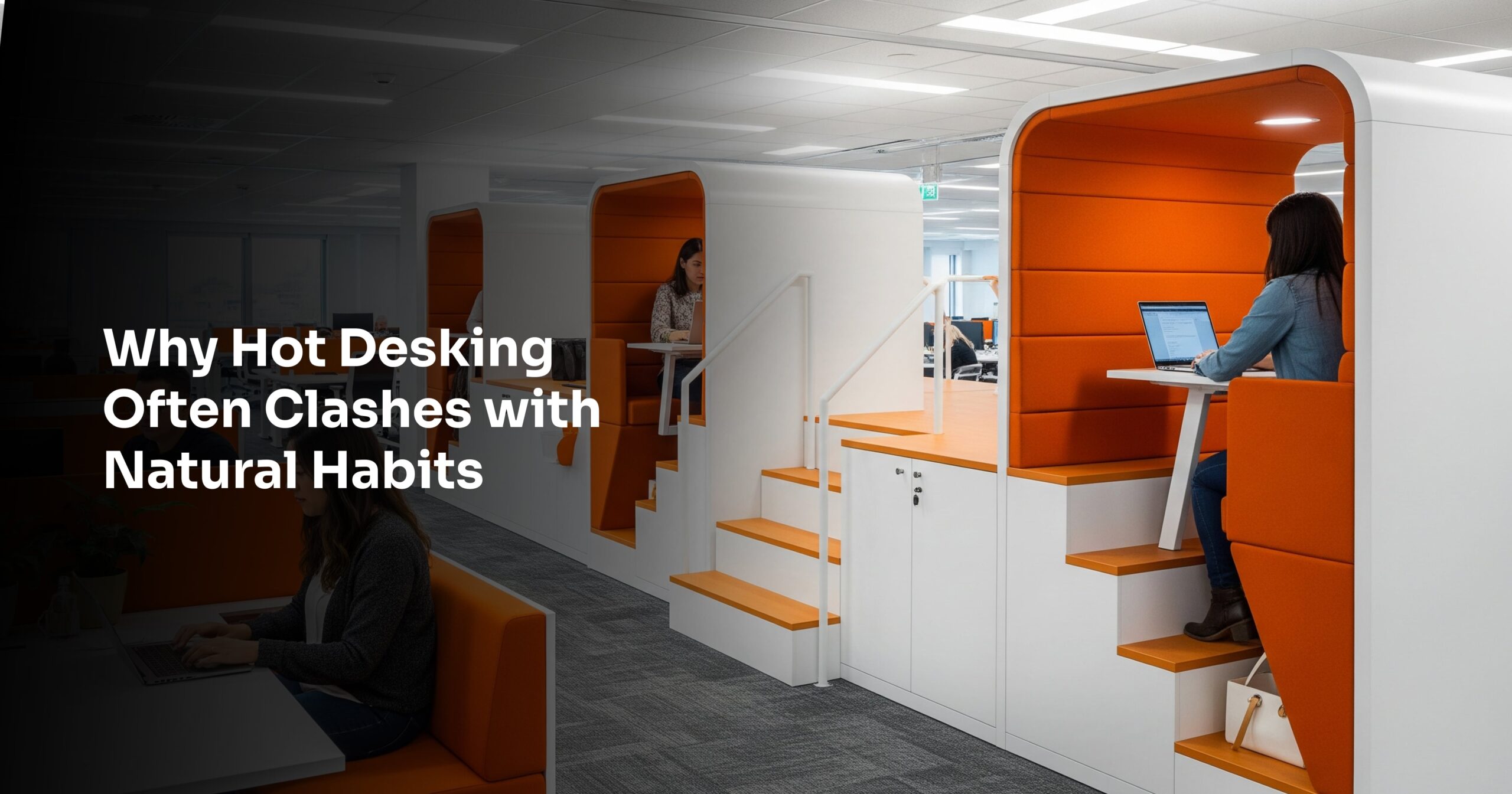
  • Zone It Out: Offer diverse spaces—quiet zones, collab hubs, standing desks—so employees pick by need, not habit. Gensler’s 2024 data shows zoned offices boost satisfaction by 25%.
  • Tech That Sticks: Use booking systems with nudges (e.g., “Try a new spot!”) and ensure seamless tech at every desk. No one fights for a seat with a dead monitor.
  • Culture Counts: Foster buy-in with clear communication. A 2024 Spacewell study found 70% of employees adapt to flexible seating when they understand the “why.”
  • Personal Touches: Allow small customizations—lockers, name tags for the day—to ease the ownership itch without killing flexibility.
  • Clean and Clear: Automate sanitation schedules. Deskbird’s 2025 platform integrates cleaning alerts, cutting health worries.

Finally:- It’s “Flexibility Meets Human Nature”

Business Centers in Chennai for Hassle-Free Professional Work

Today’s fast-paced and highly competitive world needs professional workspaces that offer flexibility and modern amenities is more significant than ever. This is especially true for freelancers, small business owners, startups, and even students who require a productive environment to work in. In Chennai, the demand for well-equipped, professional business centers has surged, providing a range of options for those who need a functional workspace without the stress of managing office logistics.

A business center, also known as a shared office or coworking space, is a fully furnished and managed office space that businesses, entrepreneurs, and professionals can rent on a flexible basis. In Chennai, these centers offer state-of-the-art facilities and services, from high-speed internet and office equipment to meeting rooms and business support services. Whether you’re a student looking to complete assignments or a professional scaling up your business, business center in Chennai are emerging as a go-to solution for working in a professional environment without the hassle of traditional office management.

In this article, we’ll explore the benefits of business centers in Chennai, the factors to consider when choosing one, and how they provide a hassle-free way to work professionally.

What makes business centers in Chennai the ideal choice for professionals?

Flexibility in Terms of Space and Time

One of the most appealing features of business centers in Chennai is the flexibility they offer. Unlike traditional office spaces that require long-term leases, business centers offer month-to-month, weekly, or even daily rental options. This is especially beneficial for students, freelancers, or entrepreneurs who may not need a permanent workspace.

For instance, if you’re a student or a freelancer in Chennai, you can rent a desk or an office for a day, week, or month, based on your needs. This flexibility allows you to scale up or down as per your requirements, making it an economical choice for those just starting or in between projects.

Professional Environment

Working from home or coffee shops can be distracting, and often lacks the professional ambiance needed for productivity. Business centers in Chennai provide a professional setting with well-designed interiors, high-speed internet, conference rooms, and other amenities to create an environment that fosters focus and efficiency.

Having access to such an environment can make a significant difference, especially when you’re working on critical projects or meeting clients. Whether you’re a student looking for a quiet place to study or a business owner conducting client meetings, the professional atmosphere of a business center in Chennai can boost your productivity and add credibility to your work.

Cost-Effective Solution

Starting and maintaining a traditional office space can be expensive, especially when considering rent, utilities, office supplies, and maintenance. Business centers eliminate the need for these overhead costs by offering ready-to-use workspaces with all the necessary amenities included in the rental fee.

For small businesses, startups, and even students, this is a significant cost-saving benefit. Instead of worrying about office expenses, you can focus on your work while enjoying access to high-end infrastructure at a fraction of the cost of a traditional office.

Access to High-End Facilities

Business centers in Chennai are equipped with state-of-the-art facilities that make the workplace more efficient and professional. These include:

  • High-Speed Internet: Reliable internet is essential for businesses, freelancers, and students alike. Business centers in Chennai provide high-speed internet, ensuring that your work is uninterrupted and you can stay connected with clients or collaborators without any issues.
  • Fully Furnished Offices and Workstations: Business centers come fully furnished with modern office furniture, ergonomic chairs, and desks, allowing you to start working immediately without the need to invest in furniture or office supplies.
  • Conference Rooms: Many business centers in Chennai offer meeting rooms that can be booked for client presentations, team meetings, or conferences. These rooms are equipped with audio-visual facilities, whiteboards, and teleconferencing tools to facilitate professional discussions.
  • Printing and Scanning Services: Business centers often have printing, copying, and scanning facilities available to tenants, making it convenient to handle administrative tasks without needing to go elsewhere.
  • 24/7 Access: Many business centers operate round the clock, so you can work at any time of the day or night, depending on your schedule.

Networking Opportunities

A major benefit of working in a business center in Chennai is the opportunity to network with like-minded professionals. These centers attract a diverse group of individuals, including entrepreneurs, freelancers, and small businesses, which creates a collaborative environment.

As a student, this can be an excellent opportunity to meet professionals from different industries, learn from their experiences, and even explore potential career opportunities. For business owners and entrepreneurs, networking within a business center could open the door to partnerships, collaborations, and valuable insights.

Access to Business Support Services

Business centers in Chennai provide several value-added services that can ease the operational load on business owners and entrepreneurs. These services include:

  • Reception and Call Answering: A dedicated receptionist can answer your calls and handle administrative tasks, giving your business a more professional image.
  • Mail Handling: Business centers often offer mail collection and forwarding services, ensuring that you never miss important correspondence.
  • IT Support: Some centers also provide on-site IT support, ensuring that you can resolve technical issues quickly and continue working without interruption.

Prime Location

Chennai is a growing business hub in South India, and business centers are often located in prime areas that are well-connected and easily accessible. Whether you’re in the heart of the city or in a well-connected suburban area, business centers in Chennai are strategically located to allow easy access for both employees and clients.

Factors to Consider When Choosing a Business Center in Chennai

While business centers offer a plethora of benefits, it’s important to choose the one that best suits your needs. Here are a few factors to consider when selecting a business center in Chennai:

Location

The location of the business center plays a crucial role in your decision-making process. Look for a business center that is centrally located or easily accessible by public transportation. Consider factors such as proximity to clients, networking opportunities, and transportation facilities.

Amenities and Services

Different business centers offer varying amenities and services. It’s essential to understand what’s included in your rental fee and what additional services are available at an extra cost. Make sure the center provides all the services you need to run your business smoothly.

Pricing and Flexibility

Pricing is an important consideration when choosing a business center. Be sure to evaluate the pricing structure and choose a center that fits within your budget. Additionally, check for the flexibility of rental agreements. Business centers that offer short-term leases and pay-as-you-go models are ideal for freelancers, students, and startups.

Reputation and Reviews

Before choosing a business center, take the time to research the center’s reputation. Look for online reviews or testimonials from other clients to gauge the quality of service, facilities, and overall experience. You can also visit the business center in person to get a feel for the environment and assess if it meets your expectations.

Security and Privacy

Security is crucial when choosing a workspace. Ensure that the business center has proper security measures, such as access control, CCTV surveillance, and secure internet connections. Additionally, consider the level of privacy provided for your business, especially if you are handling sensitive data.

Why Choose The Executive Zone?

The Executive Zone is one of the leading business centers in Chennai, 

offering flexible office spaces with professional amenities. We offer a range of workspaces, from private offices to shared coworking spaces. We also provide meeting rooms, virtual offices, and business lounges.

Business centers in Chennai are revolutionizing the way people work by offering flexible, cost-effective, and professional workspaces. Whether you are a student, freelancer, or entrepreneur, these centers provide an excellent environment to focus, collaborate, and grow your business. With modern facilities, networking opportunities, and a hassle-free working environment, business centers in Chennai offer the perfect solution for those looking to work professionally without the stress of managing a traditional office. So, if you’re in Chennai and looking for a hassle-free way to work, consider choosing a business center that aligns with your needs and goals.