What is Risk Management Strategy? How to Have One for Your Business?

The chance of future earnings or outcomes deviating from expectations is referred to as risk. Risk refers to the level of risk that an investor is ready to accept in order to profit from an investment. Risks come in a variety of forms and originate in a variety of settings. Risk management is the process of identifying, assessing, and controlling hazards to an organization’s capital and profitability. The process of creating and implementing decisions that decrease the negative impact of risk on an organization is known as risk management. It’s the process of determining the likelihood of loss or injury and then taking steps to mitigate the risk. When a person assesses the likelihood of incurring large vet expenses and determines whether or not to acquire pet insurance, this is an example of risk management. Risk classification is the technique of categorizing people based on the risks they pose, such as similarities in the costs of potential losses or damages, the frequency with which the risks arise, and whether or not efforts are done to mitigate or eliminate the risks.

Risk is divided into two types: systematic and unsystematic. Systematic Risk – The market’s total impact. Unsystematic Risk — Uncertainty about a specific asset or firm. Political/Regulatory Risk – The consequences of political actions and regulatory changes. Financial risks can be categorized in a number of ways. One technique for doing so is to divide financial risk into four categories: market risk, credit risk, liquidity risk, and operational risk. A risk categorization system serves three basic purposes: to protect the financial health of the insurance programme, to improve fairness, and to allow economic incentives to work, resulting in widespread coverage availability. It’s also known as “risk retention,” and it’s a type of risk management that’s widespread in business and finance.

Loss prevention and control are two methods for lowering risk. Medical care, fire departments, night security guards, sprinkler systems, and burglar alarms are examples of risk reduction—attempts to deal with risk by preventing loss or reducing the possibility that it will occur. Risk transfer is a typical risk management approach in which an individual or entity’s potential loss from an adverse outcome is shifted to a third party.

To compensate the third party for taking on the risk, the individual or corporation will usually make monthly payments to the third party. Any condition, event, occurrence, or situation that has the potential to have a positive influence on a project or business is referred to as a positive risk. Taking a risk does not have to be a bad thing; there are advantages to taking a risk. It has the potential to help your project achieve its objectives. By developing a risk management plan and taking precautionary efforts, an organization can save money and preserve its future. Risk management provides the following benefits as well: Ensures a safe and secure working environment for all workers and customers.

A risk management plan is a method for recognizing, assessing, and managing risk that is structured and consistent. It has a method for updating and revising the evaluation on a regular basis in light of new events or actions made. In general, risks with a high likelihood of producing financial loss or damage should be avoided. IT security threats and data-related hazards, as well as risk management measures to mitigate them, have risen to the top of the priority list for digital businesses. As a result, risk management plans increasingly include ways for identifying and controlling threats to digital assets such as sensitive company data, a customer’s personally identifiable information (PII), and intellectual property.

Risk Management Strategy for Business

Every company and organization is vulnerable to unforeseeable, destructive events that could cost them money or compel them to close forever. Risk management enables businesses to prepare for the unforeseeable by reducing risks and expenses before they occur.

A company can save money and secure its future by developing a risk management plan and considering the many potential hazards or events before they occur. This is because a robust risk management plan may help a company set procedures to avoid potential threats, lessen their impact if they do materialize, and deal with the consequences of those threats.

Organizations that effectively recognize and manage risk can be more confident in their business decisions.

Risk management also has the following major advantages:

  •  It creates a safe and secure work environment for all employees and consumers.
  •  Increases the stability of business operations while minimizing legal liability.
  • Provides protection against incidents that are harmful to the firm as well as the environment.
  • Ensures that all individuals and assets involved are safe from harm.
  • Assists in determining the insurance needs of the organization in order to prevent paying unnecessary premiums.

It was also stressed the significance of combining risk management with patient safety. In hospitals and enterprises, risk management and patient safety divisions are normally segregated; they have different leadership, goals, and scope. Some hospitals, on the other hand, are realizing that the ability to offer safe, high-quality patient care is critical to the protection of financial assets and, as a result, should be included in risk management.

Risk Management Process

Risk Management Strategies and Processes

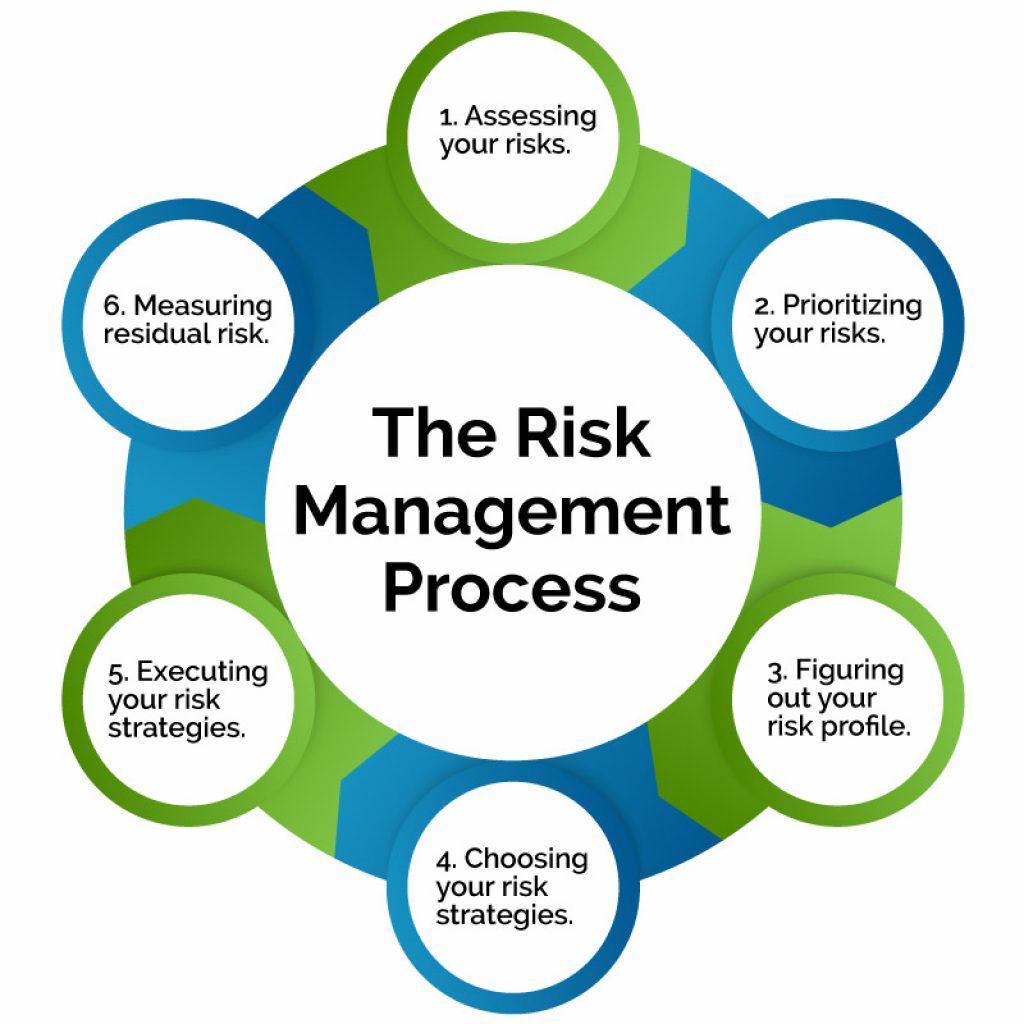
All risk management plans follow the same steps that combine to make up the overall risk management process:

  • Create a Context: Recognize the circumstances under which the remainder of the procedure will occur. The criteria for assessing risk, as well as the structure for the analysis, should be specified.
  • Identifying Potential Risks: The business analyses and specifies potential risks that could have a negative impact on a certain process or project.
  • Risk Assessment: The organization evaluates the possibility of particular categories of the risk occurring, as well as the potential consequences, after recognizing them.
  • Identifying and Assessing Risks: The risk is further investigated after assessing its overall likelihood of occurrence as well as its overall impact. The corporation can then decide whether the risk is acceptable and whether it is willing to take it on based on its risk appetite.
  • Risk Reduction: Companies analyze their highest-ranking risks during this step and design a plan to mitigate them using specific risk controls. In the event that the risk materializes, these procedures include risk mitigation approaches, risk preventive tactics, and contingency preparations.
  • Keep an Eye on the Risks: Part of the mitigation plan is to follow up on both the risks and the broader strategy to continuously monitor and track new and existing hazards. The overall risk management approach should also be examined and adjusted as necessary.
  • Communicate and Consult: Internal and external stakeholders should be communicated with at each relevant phase of the risk management process, as well as through the entire process.

Risk management strategies should also attempt to answer the following questions:

  1. What could possibly go wrong? Take into account both the overall workplace and individual tasks.
  2. What impact will it have on the organization? Consider the event’s likelihood and if it will have a significant or minor impact.
  3. Is there anything that can be done? What safety measures may be taken to avoid the loss?  What steps should be taken to recover if a loss occurs?
  4. What will the organization do if something goes wrong?

Approaches to Risk Management:

After the company’s distinct risks are identified and the risk management process has been applied, there are several different strategies companies can take in regard to different types of risk:

  • Risk Avoidance: While it is difficult to be able to completely avoid all risks, a risk-avoidance strategy aids to deflect as many risks as possible in order to avoid the costly and disruptive repercussions of a catastrophe.
  • Risk Reduction: Certain dangers can sometimes be reduced in the amount of damage they bring to a company’s operations.
  • Risk Sharing: The indication of risk is sometimes shared or spread among a number of project participants or corporate units.
  • Risk Retaining: Occasionally, businesses conclude that a risk is worthwhile from a business sense, and they choose to keep the risk and deal with the consequences. Companies will generally keep a certain amount of risk if the expected return on a project is greater than the costs of its potential risk.

Limitations:

While risk management may be a very beneficial technique for businesses, it does have some drawbacks that should be considered. Many risk analysis procedures, such as developing a model or running a simulation, necessitate the collection of vast volumes of data. This vast data collection can be costly, and its accuracy cannot be guaranteed.

Furthermore, if simplistic indicators are used to reflect the much more complicated facts of the issue, the use of data in decision-making processes may have bad results. Similarly, extending a decision made for one minor element of the project to the entire project can result in unforeseen outcomes.

Another constraint is a lack of competence in the analysis as well as time. To simulate occurrences that could have a detrimental influence on the organization, computer software programs have been developed. These complicated algorithms, while cost-effective, necessitate skilled employees with a broad range of skills and expertise in order to appropriately interpret the generated findings. Highly trained professionals are also required to analyze previous data in order to identify dangers. It’s possible that these people won’t always be assigned to the project. Even if they are, there is sometimes insufficient time to collect all of their findings, resulting in disagreements.

Other Limitations Include:

  • An erroneous sense of security. Value-at-risk measurements are concerned with the past rather than the future. As a result, the better the situation appears the longer things run well. Unfortunately, this increases the likelihood of a slump.
  • The phantom of control. Risk models can give businesses the misleading impression that they can assess and control all possible risks. This could lead to a company overlooking the prospect of new or unforeseen threats. Furthermore, because new products have no past data, there is no experience on which to build models.
  • Risk management is immature, making it impossible to perceive and understand the full picture of cumulative risk.

Risks Your Coworking Business Should Address :

As the popularity of shared office spaces grows, so does the number of people who are interested in learning more about the hazards that come with owning one. This is unsurprising, given everything, including enterprises and investments, comes with its own set of risks – and serviced office spaces are no exception. On that topic, let’s take a look at five hazards that present and aspiring business owners should be aware of in order to maintain a fully furnished office space that thrives.

Data Privacy and Cybersecurity:

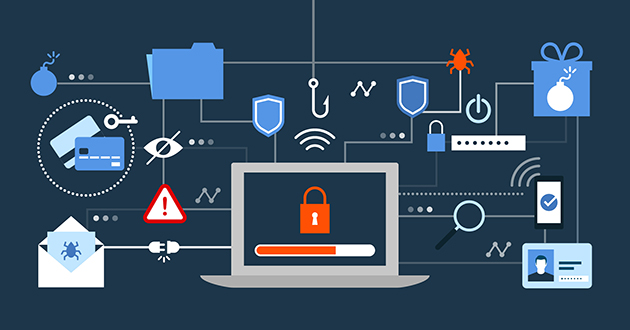
Working in an open space with dozens of other businesses and sharing WiFi is a data disaster waiting to happen. Given that a coworking space’s WiFi connection is one of the most significant services it provides, it makes sense to appreciate and safeguard the security of not only your own company’s data but also that of your clients’. After all, your customers want to know that their personal information won’t fall into the hands of competitors or cybercriminals attempting to break into your network. A data breach might not only harm a coworking space’s brand but can also result in a liability case.

Marcus’ guide to cyber security basics advocates keeping all computer operating systems and other equipment up to date, as well as creating strong WiFi passwords that are changed every few days, to help mitigate the problem. Put in place certain security processes in the event of a breach, and aim to raise cyber security awareness among your clientele. While there are only so many steps you can take to ensure your clients’ security, knowing the basics and performing the little things can go a long way.

Theft of Equipment‍:

Recognize that you can’t control what your clients do, but you can do your best to keep unpleasant activities like theft from occurring in your coworking space. The danger of theft at a coworking space is higher than in a regular office because there are many different sorts of businesses working there and a steady stream of individuals coming in and out. While the type of theft depends on the packages or memberships they buy, it’s still a good idea to make sure all of your clients’ valuables are safe. For example, provide safe lockers for clients to store their belongings, and install cameras throughout the area to monitor every perspective.

Access Management:

What software do you use to control who has access to your coworking space? Mobile devices, key fobs, or key cards? Because former clients who still have access to your place can constitute a significant risk, it’s critical to address how you grant and remove access to your area. These clients have the ability to enter without being noticed, or even steal equipment from present clients. It is, therefore, critical to provide and revoke access at the appropriate moments. We propose syncing your coworking space software with your access system so that access may be granted and canceled at any moment for new and previous clients. If you use key cards or key fobs, it’s also a good idea to have a procedure or protocol in place for when new or returning renters arrive at the coworking space.

9 Ways to Foster Creativity and Innovation On Your Team

Creativity is the process of personalizing an idea by altering it or mixing it with other ideas to create something fulfilling. The ability to come up with new and intriguing ideas is the definition of creativity. This is an example of innovation when Apple Computer comes out with a totally new product that no one has ever thought of before, such as the iPod. A painter’s outstanding work of art is proof of his or her inventiveness. The ability to think about a task or an issue in a new or unusual way, or the ability to use one’s imagination to come up with fresh ideas, is referred to as creativity. Creativity allows you to solve hard challenges or come up with novel approaches to assignments. When you’re creative, you see things from a different perspective. Be a listener who actively seeks out information. According to Halper, “many creative professionals don’t truly hear anything beyond the surface of what their clients claim they require.” You can fine-tune a project to better match the company’s needs by listening, learning, and asking questions.

All humans are born with the ability to be creative, especially when it comes to problem-solving abilities. It’s crucial because it allows you to see problems and situations in a new light. Creating thinking is a method for developing innovative or unconventional answers that are not entirely reliant on previous or current solutions. Thinking of new ways to do things is what creativity is all about. It entails coming up with unique ideas or behaviors.

Analysis, open-mindedness, problem-solving, organizing, and communication are all aspects of creative thinking. They include a wide range of topics related to creativity, such as idea creation and divergent thinking strategies, problem re-framing approaches, changes in the effective environment, and so on. Creative thinkers are enthralled by their surroundings. They ask a lot of questions and have a really intense focus that puts them into almost a trance as they try to figure out how something works, or the finer points of a beautiful building, or whatever else they can think of.

There are numerous instances of creative thinking/doing talents in the workplace, including developing a social media strategy for a new product, organizing an in-store display for maximum impact, creating a new method of processing reimbursements, and enhancing customer service. We can view and solve problems in a more open and imaginative way thanks to creativity. The mind is opened by creativity. Generations of individuals may be closed-minded as a result of a culture that has lost touch with its creative side. It can help us overcome stereotypes by broadening our horizons. A creative professional, often known as a creative specialist, is someone who works in the creative industry to extract abilities.

Estimates of creative professionals are frequently erroneous because many creative professionals (actors and authors, for example) also work in secondary professions. Creativity’s Three Components Creativity is a product of three factors within each person: expertise, creative-thinking skills, and motivation.

Creative Thinking Techniques

Because most challenges may necessitate approaches that have never been conceived or explored before, an emphasis on creativity and innovation is critical. Individually, it is a highly valued skill, and corporations should always strive to have it among their ranks. After all, the term “creativity” refers to the act of creating something new. As a result, the demand for coworking space is increasing.

“Read also: Why Coworking Spaces are in Demand?”

Creative thinking is a skill that, like any other, requires regular practice to maintain its sharpness. In a shared office environment, you will be exposed to scenarios where a fresh idea is required on a frequent basis, and you will be surrounded by like-minded people to help you reach this aim. One of the advantages of working in a coworking space is this. Using specific strategies, such a process can be made easier. It aids in business networking and the formation of a coworking community, which leads to the formation of a business community. They can help you get into the appropriate mentality and provide you the foundation you need to generate fresh ideas on the go.

Working in a coworking space has a lot of benefits. Creative thinking can be prompted by a variety of approaches, as you’ve just learned. These are powerful ways for helping you generate new ideas, test them in new situations (including remote working), and rely on feedback from others to make them even more inventive. Lateral thinking, visual reading, out-of-the-box thinking, copywriting, artistic creativity, problem-solving, analytical mind, and divergent thinking are some of the best examples of creative thinking skills.

Here are the best creative thinking techniques you can use

1. Brainstorming

This method can be quite effective in solving minor or large-scale problems that demand creativity. The main purpose is to build a group of people with whom you can freely exchange thoughts. The main notion behind brainstorming is that having a large number of creative potential ideas makes it easier to choose the best one. Brainstorming provides a number of benefits that can aid in the development of your creative thinking abilities. For starters, because it is highly casual, it does not require a rigid framework to function. Professional guidance, on the other hand, can make it easier. Also, because you can use a virtual environment or enter thoughts into a shared document, the persons involved do not need to be present at the same moment. All participants must be aware of the problem that requires a creative solution and be familiar with how brainstorming works in order for it to operate properly. Finally, don’t forget to record all of your thoughts using the correct documentation.

2. Recognize Innovation Opportunities

Recognize the problems that existing customers have with your products or those of your competitors. If the industry is dissatisfied with current offers, there is a chance for innovation to emerge. As a result, every challenge or market crisis that a product encounters is an opportunity to innovate and thrive. 

A stapler is a wonderful tool for keeping your documents together, but what if you need to manage more than 12 pages? Stapler pins can’t hold more than a dozen sheets of paper. Accenture Inc, a Pennsylvania-based office goods company, created the PaperPro to assist in the pinning of 60 papers together. Todd Moses, the company’s founder, saw that there had been no fundamental change in the product for the previous 100 years, prompting them to build a new product that is now selling millions of units in over 100 countries.

3. Foster an Innovative Environment

Do you want to keep doing business the same way you’ve always done it? Is it open to change, or is it set in stone? A company that has historically done “brick-and-mortar” business, for example, may lose out if the trend shifts to a combination of online and in-store selling. If top management is resistant to change, it will spread across the organization. And there will be no new ideas. 

The innovation group must meet on a regular basis to exchange ideas and proposals, as well as have brainstorming sessions. Limiting it to a few people will limit the company’s capacity to acquire support and fresh ideas from the full talent pool. If possible, involve the complete team of workers. Each individual has his own talent, ideas, and experiences. It is very important to assign ownership for innovative ideas and their execution. Great ideas are frequently abandoned after brainstorming sessions due to a lack of adequate follow-up or ownership within the business.

4. Mind Mapping

Mind mapping allows you to connect thoughts you never thought could be joined. As a result, it might be able to assist you in coming up with appropriate ideas while applying creative thinking skills. A mind map is a diagram in which you can input and connect thoughts. It can provide potential answers to an issue, as well as its immediate ramifications and the best course of action to address them. Alternatively, your mind map might help you see the big picture of what you’re trying to accomplish. Individual mind mapping is also possible. You may already have all of the thoughts you require, but you must put them down on paper. Making a mental map might help you organize your thoughts and come to logical conclusions. Also, because a mind map is essentially an infographic, it is easily understood by those who were not involved in the process. As a result, it is a valid piece of documentation.

“Read also: 13 Ways to Bring Mindfulness into your Workplace

5. Willingness to Experiment

Companies must be willing to try new things in order to truly innovate. Companies must exhibit an appetite for new ways of doing things, whether through co-creation with customers, discovering market adjacencies, or participating in an innovation Centre.

6. Develop an Innovation Strategy – and Use It

An innovation strategy outlines the concepts that will guide your company’s product and service innovation in order to increase market share. When it comes to problem-solving, a sound approach can help to define what is expected of employees at all levels of your firm. Leadership establishes assurance about the central role of innovation and supports the idea that innovation is everyone’s duty by adopting an innovation strategy. 

Developing an innovation plan also forces senior management to consider what innovation means to them and to define how their staff should contribute new products, systems, and service ideas in unambiguous terms. Microsoft is an excellent example of how to put an innovation strategy to use. By making its strategy a core part of employee responsibilities, Microsoft encourages its workers at all levels to make innovation a priority in their work.

7. Shake Things Up

There’s a no better approach to persuade your staff to think outside the box than to give them fresh and intriguing initiatives that aren’t part of their regular responsibilities. While some employees may be fearful of failing at first, they will eventually be enthralled by the opportunity to attempt something new in your encouraging “no idea is a bad idea” work atmosphere.

8. Use Tools to Create Time and Space to Innovate

Businesses have access to an astounding array of time-saving software. It’s never been easier to save time on essential procedures, whether it’s through project management software, online collaboration platforms, or cloud accounting systems. These software packages can assist your workers to do more than simply prevent hassles; they can also free up time for creative and imaginative thinking that they previously didn’t have. So, have a look at the software options available and consider how you could put the time savings to good use.

9. True Innovation takes Commitment and Perseverance

Despite what business coaches may claim, promoting creativity isn’t all rainbows and sunshine. It takes time, effort, and a certain amount of forgivingness for mistakes and failures to get to an inventive workplace. Even the most successful and inventive organizations, as we’ve seen, have a fair number of failures. Many of the key aspects of workplace innovation, as some observers have pointed out, also include balancing certain drawbacks. For example, fostering employee collaboration must be balanced against individual accountability, and keeping opportunities for lone wolves who get their best work done by working alone requires strong leadership. Avoiding workplace hierarchies takes strong leadership, before a firm can experiment with innovation, it must first get its day-to-day operations in order. This requires a trusting approach to management and a commitment to hiring highly motivated individuals.

So, if you’re trying to promote workplace innovation, don’t be shocked if the changes are more difficult to implement than you anticipated.

It can take a long time to innovate. Whether you’re pursuing gradual or radical innovation, it’ll almost certainly take longer than you think.

7 Reasons Why Corporates Are Moving To Coworking Spaces?

Large organizations are increasingly recognizing the benefits of coworking space. Employees of tech giants are using them to communicate with innovative start-ups and create new networking opportunities. Having peers who are on the same path as you might help with creativity and productivity. The increasing number of large firms moving into coworking spaces is a new trend.

Coworking spaces foster creativity and cooperation by allowing workers to share items like fast internet, printing equipment, workstations, and kitchen facilities with others from all over the world. Coworking space is now being embraced by major worldwide corporations, who prefer it to the typical office environment. They have compelling reasons to make the change. While coworking spaces were originally the property of freelancers, small firms, and start-ups, the business world is constantly changing.

The world’s largest corporations have set up shop in coworking spaces in pursuit of new ideas, brilliant employees, acquisition targets, and flexible office space rental and management circumstances. A flexible workspace boosts employee morale while increasing efficiency and productivity. Employees at a coworking space choose to come to work rather than being compelled to. They flourish in such environments.

Here are some of the benefits of working in a coworking space. A successful coworking space must also have a varied community with a diversity of firms and individuals representing a wide range of industries. The business community atmosphere offers opportunities for networking with like-minded professionals. Coworking spaces not only offer real estate solutions and hassle-free management, but they also provide a great event venue for members to take advantage of business prospects. Because there are so many different companies sitting next to each other, conversations are smooth and collaborations are plentiful. Coworking space is great for startup businesses searching for a professional office without the large upfront fees or long-term commitment from a cash flow standpoint. These are some basic benefits of coworking spaces for startups. A growing startup business may benefit from the flexibility of plug-and-play office space.

A coworking space’s setting is designed to promote creativity and more. Medium-sized businesses saved a lot of money on flexible, ‘amenity-packed,’ and significantly lower coworking space rentals since they had a lot more capital. Coworking spaces not only provide a location to work, but they also come with a number of benefits. There are workout areas, a Cafeteria, conference rooms, and a range of other amenities. With facilities close to support your lifestyle, you’ll be able to better balance work and personal life. The goal of shared office spaces is to create a bright and energetic environment for the people who work there. Spaces are built with the goal of motivating and supporting an innovative environment while maintaining a positive attitude. An entrepreneur would constantly want to put his or her employees in a similar situation. Coworking space providers anticipate strong growth as demand for cost-effective and flexible workspaces grows. The majority of industry professionals believe that the coworking space will witness a rebound in the near future and that it will have a good growth chance.

Now that major corporations have realized the benefits of a coworking office, the trend looks set to grow.  Here are 7 reasons why corporates are moving to Coworking space:

Value for money:

Coworking spaces are easy and uncontroversial at first glance. They’re essentially fully furnished offices with desks, Wi-Fi, receptionists, and occasionally even free refreshments for remote workers from a variety of businesses who can rent these offices on a daily, weekly, or monthly basis. It essentially tries to replicate a real office setting for people who aren’t forced to work in one. Everyone’s needs are different. Start-ups require low-cost office space. MNCs are looking for high-end office space. These premium shared offices allow for multiple businesses to work side by side. This allows tenants to split rent costs and avoid costly upfront costs such as down payments.

Working in a coworking space also comes with perks like high-speed internet, electricity, 24-hour office access, daily cleaning, and more The payment for coworking space is done based on a monthly membership, the members pay according to their service in the space. Most coworking spaces, for example, offer “hot desks,” dedicated desks, or private offices. A hot desk just ensures that the member will have access to a desk at the coworking space, however, the desk will most likely change from day to day.

Flexibility:

The global pandemic has already altered how we work and live, particularly in the tech industry. While traditional building blocks for office culture included in-person group meetings and team-building exercises, the expectations for what constitutes an “office culture” have been reimagined. Now that business owners in practically every industry are contemplating flexibility, the internet is saturated with remote work statistics. Employees benefit from flexibility because many larger companies that use coworking spaces provide their employees the option of working in a conventional office or in a coworking space.

Employees have the option of choosing the most convenient location. Employers who are truly flexible will allow their workers to work in the coworking space in the most convenient location, even if it is only for the day – for example if they have errands to run in the city or appointments in the region. They’ll love having a shorter commute or being closer to their appointments.

Read also: “How Coworking Spaces Help Remote Companies & Workers

Networking:

Aside from providing a flexible working environment and a pleasant environment in which to work, coworking spaces enable their members to meet and engage with new people every day, forming a coworking community. There are numerous advantages to networking. For entrepreneurs and new enterprises, building a strong and broad professional network among people with promise is critical. Nothing is more vital for businesses in today’s society than networking or having a strong business network; regardless of your industry, whether you work for a large corporation or as a freelancer from home, getting your name out there is critical to a growing and successful business.

Advertising and networking have become nearly entirely digitized, whether through social media, emails, or websites. This online era makes it much easier for us to communicate with anyone on the globe, but it is also incredibly isolating and impersonal. Lone workers are more likely to suffer from emotional and health concerns as a direct result of isolation and loneliness, according to new research.

Shared office space is a new approach to a network that allows you to grow your business in a fun, exciting, and inspiring atmosphere with like-minded people. There’s nothing else like it; being online is amazing, but you can’t form the same bonds with people through a screen as you can when you’re working side by side with them. Every day, serviced office space stimulates connection and networking, providing the ideal environment for conversation and the development of new ideas.

Professional Address:

Coworking spaces, like virtual office spaces, provide you with a more professional mailing address for your business as well as meeting and conference rooms. Coworking spaces are positioned in the heart of a city, accessible to public transportation and restaurants while also providing a convenient place for members to work. Working from a café or home as a business owner may not give the right impression to potential clients, so a coworking space provides not only a professional area but also dedicated conference rooms, cafeterias, and lounges to help you network more effectively.

Collaboration Opportunities:

This benefit is closely related to networking. You are open to chances and opportunities while you work in a coworking space. Who knows where a casual discussion could lead? Working in close proximity to others provides for rapid collaboration. You might even be hiring someone new before you know it. The coworking community’s close closeness facilitates teamwork. When a problem arises, they just use the common areas to fix it rather than sending emails back and forth. More work is completed with more efficiency. 

Collaborative workspaces bring people together in a shared space. As a result, they reduce the amount of physical space required to accommodate each employee individually. As a result, costs are reduced, available workspace is maximized, and greater floor space utilization is encouraged. Flexibility and variety of seating are critical when it comes to teamwork. 

Collaboration is aided with large desks and tables, adjustable chairs, and standing/sitting alternatives. Productivity rises when collaborative workspaces are intended to be available for team use. Collaborative areas enable team members to work together simultaneously with practically no limits by integrating cloud-based whiteboard apps and productivity tools.

Coworking Spaces are Inspiring:

Coworking isn’t for people who see the world through a glass-half-empty lens, questioning strangers’ good intentions and even the tiniest hint of change or progress. In other words, coworking space requirements aren’t for pyjama-clad living room warriors who prefer to turn off the video on Zoom calls and don’t take advantage of their location-independent advantages. Instead, it’s for the big-picture thinkers who always know there’s more out there than what they’re getting today. 

Contractors, small-time entrepreneurs, and freelancers are increasingly used in the modern workplace to perform jobs that were previously performed in-house by large-company employees. Working on a contract basis, on the other hand, can be alienating. 

Working for a remote company with team members spread across the country or even the globe is the same. Surrounding yourself with others who are in a similar circumstance can help you stay motivated. It’s easy to feel like you’re moving horizontally rather than vertically when there’s no established and obvious corporate ladder to climb. Call me crazy, but watching other people succeed at what they do inspires me a lot more than isolating myself at home and getting FOMO from social media.

Coworking Represents the Future of Smart City Design:

The need to “drive to an office” is one of the main objections against coworking. People who make that argument seem like they’re stuck in the 1990s suburbs when even the smallest desire meant a 15-minute trek up a six-lane “neighborhood road” to the next restaurant or strip mall. Coworking may not be the most convenient option for you depending on where you live, especially for those who reside outside of a city center. Nonetheless, in the suburbs and in smaller cities and towns, spaces are becoming more prevalent. 

The coworking space’s vision encompasses more than just coworking. It’s because it just reflects a portion of what modern urbanism should be. You shouldn’t have to commute to work for 40 minutes in rush hour traffic from the suburbs to the city center, and I admit that doing so as a remote worker defeats the purpose of remote work. Instead, you should be able to walk — or, better yet, ride your bike or take public transportation — to a coworking space (or wherever you work) that is within walking distance of your home, hotel, Airbnb, or, dare we say, coliving space. This has an undeniable air of privilege about it.

 However, as the future of work continues to shift more jobs to remote locations, market demand for close-to-home, flex office space options such as cafes and coworking spaces will certainly increase. It’ll be much better if it’s all connected, with adjacent food, nightlife, and outdoor leisure options. Progress is an unavoidable reality. You may start a legal battle over it.

How to Work Smarter and Be More Productive as an Entrepreneur?

When you really focus on what you are doing and work hard, you will be surprised at how much you can get done. Something that should take a day can be done in half a day when you cut your distractions and concentrate. The more you pay attention to these techniques of productivity, the more you realize that working smarter holds the secret key to efficiently getting work done than working harder. Hard work is putting in exhausting hours of work for doing a certain task whereas Smart work refers to finding effective and efficient ways to complete one or more tasks while also managing time and quality. Working smarter boosts creativity, productivity and saves a lot of energy for the things that really matter, like your family, friends etc..,. Hard work means spending strenuous hours to complete your work without any shortcuts. It definitely gives results but the process is long and pressurized. Nowadays when people are more used to remote working, it’s important to understand the benefits of Networking. That’s where the coworking community comes into picture. There are so many advantages of coworking spaces. When you meet diverse people, ideas are generated. Smart work would produce the same results but with proper prioritizing and planning of tasks. You should not live to work instead work to live. Keeping your health in the first place, planning your tasks, and testing out alternate ways to approach your tasks makes you both happier overall and more productive. Coworking space provides such a flexible environment to work which is so beneficial for startups.

You might have innovative and creative business ideas, but if you don’t have the right organization and the fundamental productive habits developed, it’s very likely for it to not to be perform or executed in an inefficient way or even not being done at all. Although a bright idea is more likely to boom into a big business than a simply good idea, a decent idea though simple which is mindfully executed will most likely end up being successful and having a big business community. When someone starts a new project, they usually do it with a very few resources, with less amount of money and with little time available. One major benefit of working in a coworking space is that you get to save both. Even if you commit yourself to the project around the clock, at the start you’ll need to take different roles, and each one of them would require an important commitment. If you’re lucky enough to have a small team you can delegate some of the tasks, but managing that team, and delegating and prioritizing tasks will also be your responsibility. That’s where business networking plays an important role. Smart entrepreneurs tend to be prompt, patient, mentally ready, creative, flexible, efficient, well groomed in their appearance, passionate, elegant, sophisticated, current and charismatic. Smart can be defined as the summation of various characteristics expressing itself through a person’s influence on the world. Entrepreneurs are extremely smart, they have thoughts way too ahead of others, and can find solutions even when others are unable to. Despite the fact that most entrepreneurs have high Intelligent Quotients. Complex problem solving ability can be said to be the core of IQ. There is also a relation between complex problem solving ability and creative solutions that entrepreneurs are known best for. New studies are coming out that show the “executive network” (the part of the brain responsible for complex problem solving) is not the same as the “executive function” of focused problem solving. Yet, people with unfocused problem solving skills found to have superior intelligence instead of the rest of the average. Many entrepreneurs start a business, ignoring the risks involved or don’t even bother to figure them out. Some entrepreneurs get lucky, but most of them fail. Some entrepreneurs fail a few times and gain experience and eventually become a better entrepreneur. But experience is not intelligence. Meanwhile, people who are more intelligent are handicapped by fear of risks and end up never starting a business. This is not to say that there are many entrepreneurs who are not intelligent. Some of them are extremely intelligent. But the majority is average or below. Just think of all the failed startups, small scale businesses in your town, and products or services that make no sense. The highest possible risk of failure faced by an entrepreneur is a poor execution of the plans. Planning is usually not the problem. Not even the ideas. At last, it’s the market that decides if your idea is good enough or not to sustain. There must be a good market and enough customers willing to pay for it, so the business you’re going to create will be successful and profitable. In any case, if the original idea is not good enough to penetrate the market, a good execution of the plan should help you notice the issue quickly, and let you create changes on that idea according to the needs of potential clients. For example, you can find that, in addition to programming, analyzing, researching and designing, you have to manage a website, write articles for the blog, support users, search for investors, keep your brand active in social networking platforms, and conduct marketing campaigns. You meet various like-minded people in a shared workspace and this is one of the advantages of coworking space. At the end of this, you would surely want to spend some time with your loved ones (family and friends), along with making time for yourself, enjoying your hobbies. 

Read also: “How Coworking Spaces Help Remote Companies & Workers

Productive Entrepreneur

Here are 5 techniques that can help you to become to become a smart entrepreneur:

1 . Say Yes to Innovation and Creativity:

This is the proper method to become a smart entrepreneur. If you find any forum, meetings, or any website where topics related creativity and innovation; then, join them. Subscribe them and get some notifications, business meetings and start networking with them. Some small creative and innovative ideas make your mind more creative automatically. So, you’ve to prepare yourself for all innovation and creativity based talent.

2. Keep Track of Short-Term and Long-Term Goals:

The importance of measurable milestones cannot be overemphasized. And knowing the difference between short-term goals and long-term goals is vital. They measure progress weekly or monthly to make sure the team is on track to achieve the long-term goal of their businesses

3. Steps Out of your Comfort Zones on a Regular Basis:

Successful entrepreneurs always seek new challenges. Without new challenges, they feel bored and sometimes stagnant. Your comfort zone may feel soothing and safe but you need to push yourself out of the zone. Stretch your personal boundaries, network and connect with people who inspire you and take a unique approach to how you work to achieve more.

4. Getting Work Done Smarter and Faster not Harder:

You should strive to work smarter, not harder. Smart entrepreneurs create complex and realistic schedules which they will actually achieve within a given period. They enhance their productivity by tools that can make them achieve more without necessarily working harder. Enhance your productivity by creating a to-do list and limiting the percentage of new items you add to your list of things to do every day. Evaluate yourself by how you get things instead of the time it takes to urge them done.

5. Take Calculated Risks:

Calculated risks are taken by your mindset and some real data & proofs. You’ve to get education, knowledge, right experience and must read more and more books to become a right risk taker. Always try to learn and be sure of the subject in which you are going to take risks. You have to meet new people who can guide you and share those personal experiences in the field you are working in.

Execution depends on your personal organization. To develop your business idea you must give attention on to the things that are important and put the right actions at the right moment, and that can’t be done without previous organization. And it’s not about having everything in its place, but about having a technique in place to help you make decisions and advance in every project. New things will keep on come up, some distractions, and some tasks that seem more vital than they truly are. That’s the reason, in addition to consistency, self-discipline and passion for what you’re doing, you also mandatorily need a system that helps you concentrate on what’s vital.

There are so many personal organization systems, almost as many as people on earth. But there’s one system that, throughout the years, has proven to work better than the others. It’s called Getting Things Done (GTD for short). GTD is a personal management system suitable for any person who’s looking to enhance their effectiveness at work and in their personal lives and, at the same time, remove the stress which provokes doing a lot of things. That’s why it is perfect for any person who is in an entrepreneurship venture. It’s explained in detail below:

  • GTD encourages you to focus on everything that goes on in your head, including any ideas that you have regarding new business ventures. This is vital for an entrepreneur. You may different ideas to enhance your product or service, to make it stand out in the market, to make it more reachable to your target audience or market, and even if it’s not the right time to carry them out, still you can store them in the “Maybe or someday” list so you can go back to them in the future when needed.
  • GTD helps you to plan and execute your projects in a natural way, starting from the purpose and action defining you should take. The GTD’s idea is to make the way clear and make the process of generating ideas and organizing them out mentally. GTD pushes you to advance each day because you’re constantly asking yourself “what’s next?”
  • GTD does not only define your flow of work to manage your day to day life, but it also works with the levels of angles that help you know the significance of your tasks on the long run, and your areas of responsibility. It’s really usual that sometimes you put aside the tasks that are vital to do for the task you enjoy doing the most. As an entrepreneur you need to maintain equilibrium between your every day or short term goals and your long term goals, and that’s where GTD can best help you.
  • GTD helps you to make immediate decisions at the moment, when things come up, not when there’s an issue or crisis about it. This allows you to immediately respond to the changes that will inevitably occur in your planning. There will be many instances wherein you need to change or adjust the trajectory of your startup so as not to lose opportunities for growth and development.
  • GTD doesn’t distinguish between work and personal life, and that is essential not to burn yourself out. If you’ve taken a venture of starting your own business, it must be to live better in every way.

With GTD you can do everything fundamental to launch your project in an effective, efficient and calm way, having the mindset that everything’s under control. You may not be able to achieve this the first time you try — but by practice and changing some habits takes time and effort — but it’s worth the change. To achieve in any field, you have to work for it. We all have dreams. All people have the desire to do or to achieve something from life and work. If you work for money then, someone else or your head will get his dream achieved. Your dream should not be based on money but, it can be that your dreams can be achieved by making money. But, helping others with innovative and creative products will make your dreams successful. When you’re an entrepreneur, you naturally be “on” at all times. However, this can bring down your creativity and may have an effect on your effectiveness. Take time for yourself and make your mind calm – your mind (and business) will thank you.

13 Ways to Bring Mindfulness into your Workplace

The term “mindfulness” is a simple one. It implies that your mind is completely focused on what’s going on, what you’re doing, and the space you’re in. That may not seem significant, but it is because we frequently deviate from the topic at hand. Our minds take off, we lose touch with our bodies, and we find ourselves engrossed in obsessive thoughts about the past or worrying about the future. As a result, we are concerned. Mindfulness is defined as the ability to be fully present, aware of where we are and what we’re doing, and not overly reactive or overwhelmed by what is going on around us. Every human being is born with mindfulness; you simply need to learn how to access it. When we are mindful, we can reduce stress, improve performance, gain insight and awareness, and pay more attention to the well-being of others. In today’s world, where remote work has taken over, practicing mindfulness has never been more important, practicing mindfulness is very important. Mindfulness Meditation creates a space in our lives where we can suspend judgment and explore our natural curiosity about the mind’s workings, while also being kind and warm to ourselves and others. Mindfulness meditation is a type of mental training that teaches you to calm your mind and body by slowing down racing thoughts, letting go of negativity, and focusing on the present moment. It combines meditation with mindfulness, which is defined as a mental state in which you are fully focused on “the now” and can accept and acknowledge your thoughts, feelings, and sensations without judgment. Deep breathing and awareness of the body and mind are part of mindfulness meditation. The techniques vary, but they all involve deep breathing and body and mind awareness. There are no props or preparations required for mindfulness meditation (no need for candles, essential oils, or mantras, unless you enjoy them). To get started, all you need is a comfortable seat, three to five minutes of free time, and an open mind.

What is Mindfulness in the Workplace?

The workplace can be a high-pressure, fast-paced environment. Is it possible to thrive in the workplace rather than flounder? Mindfulness – gently observing what is going on for us in the present moment without passing judgment – could be the key. Though research in the areas of mindfulness at work and mindful leadership is lagging, interest in these topics is growing. Simply put, workplace mindfulness is the degree to which people are aware of their surroundings while at work. What does it mean to be mindful, then? Mindfulness, like so many other constructs in positive psychology, is difficult to define. Mindfulness is defined as a state of consciousness that is focused on the present moment. In other words, a mindful person is simply “being” in the present moment, rather than ruminating on the past or worrying about the future. Second, mindfulness entails being mindful of both internal and external stimuli. Finally, mindfulness entails not only paying attention to stimuli but also doing so in an open and accepting manner. Mindfulness entails observing what is going on without judging, analyzing, or reflecting on it; as a result, mindful information processing is referred to as “pre-conceptual.” As a result, a mindful employee will observe what is going on in the workplace rather than reacting to it, instead taking in information from their surroundings. They will approach their work and relationships with coworkers and management without prejudice. Coworking community has taken an initiative in promoting mindfulness while working. There are so many coworking spaces that have adapted this. It is sometimes difficult to do that in a regular office. This is one of the major advantages of coworking space. Many researchers now consider mindfulness to be a psychological state that varies from moment to moment within individuals, despite the fact that the majority of research into individual differences in mindfulness sees it as a trait. Furthermore, mindfulness has been described as a natural human capacity that varies in strength depending on circumstances and individuals. Well, it means that employees’ mindfulness varies throughout the working day; they may be paying attention, in a meeting – focused on whatever the presenter is talking about. Perhaps they are less mindful later in the day and are staring at the computer, pondering what to cook for dinner. So, while the individual has the ability to be mindful, their level of mindfulness at any given time is variable.

Mindfulness Meditation Puriyudha?

Benefits of Mindfulness in the Workplace and Business

As we transition from a manufacturing to a knowledge-based economy, mindfulness in the workplace is becoming increasingly important. The body was the primary means of production in a manufacturing economy. It is, however, the brain in a knowledge economy. Workplaces and businesses can benefit from mindfulness in a variety of ways. Some mindfulness-based processes are thought to improve employee performance and well-being in general. These include increased self-determination and persistence, improved working memory, and more accurate affective forecasting, as well as response flexibility, and decreased rumination, empathy, and affect regulations. Improvements in task commitment and work enjoyment are also among the advantages of mindfulness in the workplace. Another reason mindfulness is important is that it can aid in the prevention and management of employee stress. Chronic stress is a major issue in today’s society, perhaps most notably at work. Mindfulness is also beneficial in the workplace because it can improve employee engagement and reduce burnout. Employee investment in their jobs has been linked to higher employee satisfaction, lower turnover intentions, and increased organizational citizenship behaviors. Increased employee engagement has been linked to mindfulness. Mindfulness has been linked to improved performance as well as a lower likelihood of turnover.

Mindfulness Coworking Space

How to bring Mindfulness into your Workspace

1. SET AN INTENTION AT THE BEGINNING OF EVERY DAY

You should write down an intention to keep you focused in order to set yourself up for a successful day. “I will look at every obstacle today as a positive learning experience,” for example, could be a work goal or something more personal. You can either write your intention on a Post-It note and tape it to your computer or repeat it to yourself at work. You can keep a mental mantra to help you get through the day by doing so. This mindfulness technique also encourages you to check in with yourself and consider changes you can make to improve your self-awareness.

2. LEARN HOW TO BE PRESENT

It’s easy to go through the motions of a job without thinking no matter what type of environment you work in. Take a break to check in with your surroundings if you find yourself daydreaming or drifting away from your work. You can use a few questions to help you ground yourself and become more present in the moment. What is one task on which you can focus? What’s going on around you; who’s there, what are they doing, and what noises are you hearing? So far today, what have you accomplished? Taking the time to reflect on yourself and your work will help you to refocus, improve your concentration, and give you a boost to finish the day strong.

3. TAKE A MEDITATION BREAK

Are you feeling tense? Think about it for a while. Although mindfulness is usually associated with being aware of your thoughts, there are times when you need to clear your mind in order to focus on what matters. To reset your mind, take a ten-minute break during the day to sit outside and listen to a quick podcast or meditation app. When you get back to work, you’ll feel revitalized and ready to get back to work.

4. FILL BREAKS WITH MINDFUL ACTIVITY

It only takes a few minutes of mindfulness practice to achieve that feeling of calm. Spend a few minutes of your break noticing your thoughts and feelings, whether they’re negative or positive, and accepting that you won’t feel this way forever – it’s just the way things are.

5. WALK MINDFULLY

Walking around the office is a must, but doing so mindfully can add an extra layer of goodness that you didn’t realize was there. Walking mindfully entails paying attention to the sensations of your feet on the ground, the wind on your face if you’re outside, and whatever else you’re feeling. This can give you a greater sense of purpose in your daily activities and make your day more enjoyable..

6. EAT MINDFULLY

We’ve all experienced the dreaded “after-lunch slump.” Perhaps you were starving by the time your lunch hour arrived, and you ate too much or chose something less healthy than you intended. This can be mitigated by eating mindfully. Don’t sit and scroll through your phone while eating; instead, taste the food and notice how full you are. It really improves the experience of eating a store-bought meal deal or reheated dinner!

7. NOTICE WHAT YOU’RE DOING AT YOUR DESK

It’s all too easy to become completely absorbed in your work. Have you ever been zoning out for what seemed like only a few minutes and then wondered how you ended up with 100 tabs open in your browser? Simply being more aware of the work you’re doing at any given time can help to alleviate the stress that comes with trying to do too many things at once. For starters, you’ll be more likely to focus on one task at a time, and you’ll be more self-aware, realizing that you’re doing everything you can to reduce your to-do list.

8. PRACTICE MINDFULNESS WITH COLLEAGUES

We’re not going back on our word about group meditation, either. In almost any group situation, mindfulness can be practiced. There are numerous advantages to networking. Organizing a networking event where you discuss the drinks or food on offer, how you’re feeling at the time, or what you think of the background music, for example, is a simple way to get people to act and talk mindfully. You can even include beer or cake!

9. SHOW YOUR EMPLOYEES THAT YOU CARE

Finally, encouraging mindfulness in the workplace is about demonstrating your concern for your employees. Create a business network. Investing in wellness activities or providing tips on how to manage their mental and physical well-being in a way that shows you genuinely care about them will speak volumes more than giving them a free gym membership. One of the advantages of shared office space is that it encourages your employees to be the best they can be, and you can’t go wrong with that.

10. FOCUS ON ONE TASK AT A TIME

Have you ever attempted to accomplish three tasks at once? Are any of the tasks completed well when you do? Most likely not. When practicing mindfulness, it’s critical to concentrate on just one thing at a time. When you attempt to complete too much work at once, you become overwhelmed and are unable to complete any of the assignments to your full potential. Begin by making a list of tasks to complete and prioritizing them. Then, as you leave work to return home, you’ll be able to reflect on the day and feel satisfied.

11. PRACTICE HAVING A GROWTH MINDSET

Every successful unicorn shares one trait: they are all growth-oriented. Rather than saying you can’t change, work on improving your skills and your life. Set small goals for yourself to help you develop a growth mindset. Finding and acknowledging your flaws is also important, though difficult; this gives you a vantage point from which to silence that self-critical voice that can hold you back. Having a growth mindset will help you be more aware of your daily actions while also improving your self-esteem both at work and outside of it.

12. WRITE DOWN YOUR ACCOMPLISHMENTS

When you write down all of the positive things that happened at work, you may not realize how much you accomplished. Before you leave for the day, take a few moments to reflect on your day and write down any accomplishments. This will improve your mood, productivity, and sense of purpose for the day. It allows you to breathe and let go of the day so you don’t have to worry about it later. Don’t forget to leave your list of accomplishments on your desk for the next day’s reading, and you’ll be well on your way to another productive day.

13. CREATE A MINDFUL WORKING CULTURE

More than just practicing mindfulness is required to create a mindful workplace culture. Of course, it isn’t suitable for everyone. It’s also critical to create a working environment that fully supports employee well-being. We assist our clients in developing inspiring and engaging workplaces that enable their employees to achieve their full potential. So, if you’re thinking about improving the working environment at your company, our free workplace assessment service can help you with design, furniture, technology, budgets, and more, so you can create a space that promotes wellbeing, happiness, and productivity..