How to Work Smarter and Be More Productive as an Entrepreneur?

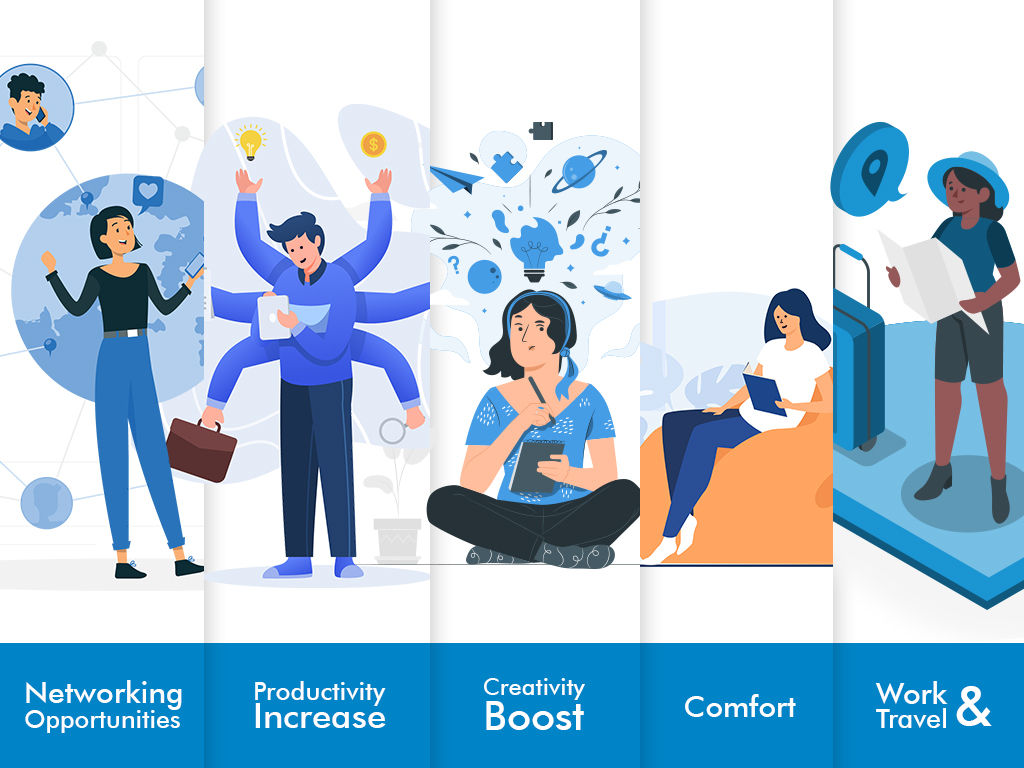
When you really focus on what you are doing and work hard, you will be surprised at how much you can get done. Something that should take a day can be done in half a day when you cut your distractions and concentrate. The more you pay attention to these techniques of productivity, the more you realize that working smarter holds the secret key to efficiently getting work done than working harder. Hard work is putting in exhausting hours of work for doing a certain task whereas Smart work refers to finding effective and efficient ways to complete one or more tasks while also managing time and quality. Working smarter boosts creativity, productivity and saves a lot of energy for the things that really matter, like your family, friends etc..,. Hard work means spending strenuous hours to complete your work without any shortcuts. It definitely gives results but the process is long and pressurized. Nowadays when people are more used to remote working, it’s important to understand the benefits of Networking. That’s where the coworking community comes into picture. There are so many advantages of coworking spaces. When you meet diverse people, ideas are generated. Smart work would produce the same results but with proper prioritizing and planning of tasks. You should not live to work instead work to live. Keeping your health in the first place, planning your tasks, and testing out alternate ways to approach your tasks makes you both happier overall and more productive. Coworking space provides such a flexible environment to work which is so beneficial for startups.

You might have innovative and creative business ideas, but if you don’t have the right organization and the fundamental productive habits developed, it’s very likely for it to not to be perform or executed in an inefficient way or even not being done at all. Although a bright idea is more likely to boom into a big business than a simply good idea, a decent idea though simple which is mindfully executed will most likely end up being successful and having a big business community. When someone starts a new project, they usually do it with a very few resources, with less amount of money and with little time available. One major benefit of working in a coworking space is that you get to save both. Even if you commit yourself to the project around the clock, at the start you’ll need to take different roles, and each one of them would require an important commitment. If you’re lucky enough to have a small team you can delegate some of the tasks, but managing that team, and delegating and prioritizing tasks will also be your responsibility. That’s where business networking plays an important role. Smart entrepreneurs tend to be prompt, patient, mentally ready, creative, flexible, efficient, well groomed in their appearance, passionate, elegant, sophisticated, current and charismatic. Smart can be defined as the summation of various characteristics expressing itself through a person’s influence on the world. Entrepreneurs are extremely smart, they have thoughts way too ahead of others, and can find solutions even when others are unable to. Despite the fact that most entrepreneurs have high Intelligent Quotients. Complex problem solving ability can be said to be the core of IQ. There is also a relation between complex problem solving ability and creative solutions that entrepreneurs are known best for. New studies are coming out that show the “executive network” (the part of the brain responsible for complex problem solving) is not the same as the “executive function” of focused problem solving. Yet, people with unfocused problem solving skills found to have superior intelligence instead of the rest of the average. Many entrepreneurs start a business, ignoring the risks involved or don’t even bother to figure them out. Some entrepreneurs get lucky, but most of them fail. Some entrepreneurs fail a few times and gain experience and eventually become a better entrepreneur. But experience is not intelligence. Meanwhile, people who are more intelligent are handicapped by fear of risks and end up never starting a business. This is not to say that there are many entrepreneurs who are not intelligent. Some of them are extremely intelligent. But the majority is average or below. Just think of all the failed startups, small scale businesses in your town, and products or services that make no sense. The highest possible risk of failure faced by an entrepreneur is a poor execution of the plans. Planning is usually not the problem. Not even the ideas. At last, it’s the market that decides if your idea is good enough or not to sustain. There must be a good market and enough customers willing to pay for it, so the business you’re going to create will be successful and profitable. In any case, if the original idea is not good enough to penetrate the market, a good execution of the plan should help you notice the issue quickly, and let you create changes on that idea according to the needs of potential clients. For example, you can find that, in addition to programming, analyzing, researching and designing, you have to manage a website, write articles for the blog, support users, search for investors, keep your brand active in social networking platforms, and conduct marketing campaigns. You meet various like-minded people in a shared workspace and this is one of the advantages of coworking space. At the end of this, you would surely want to spend some time with your loved ones (family and friends), along with making time for yourself, enjoying your hobbies. 

Read also: “How Coworking Spaces Help Remote Companies & Workers

Productive Entrepreneur

Here are 5 techniques that can help you to become to become a smart entrepreneur:

1 . Say Yes to Innovation and Creativity:

This is the proper method to become a smart entrepreneur. If you find any forum, meetings, or any website where topics related creativity and innovation; then, join them. Subscribe them and get some notifications, business meetings and start networking with them. Some small creative and innovative ideas make your mind more creative automatically. So, you’ve to prepare yourself for all innovation and creativity based talent.

2. Keep Track of Short-Term and Long-Term Goals:

The importance of measurable milestones cannot be overemphasized. And knowing the difference between short-term goals and long-term goals is vital. They measure progress weekly or monthly to make sure the team is on track to achieve the long-term goal of their businesses

3. Steps Out of your Comfort Zones on a Regular Basis:

Successful entrepreneurs always seek new challenges. Without new challenges, they feel bored and sometimes stagnant. Your comfort zone may feel soothing and safe but you need to push yourself out of the zone. Stretch your personal boundaries, network and connect with people who inspire you and take a unique approach to how you work to achieve more.

4. Getting Work Done Smarter and Faster not Harder:

You should strive to work smarter, not harder. Smart entrepreneurs create complex and realistic schedules which they will actually achieve within a given period. They enhance their productivity by tools that can make them achieve more without necessarily working harder. Enhance your productivity by creating a to-do list and limiting the percentage of new items you add to your list of things to do every day. Evaluate yourself by how you get things instead of the time it takes to urge them done.

5. Take Calculated Risks:

Calculated risks are taken by your mindset and some real data & proofs. You’ve to get education, knowledge, right experience and must read more and more books to become a right risk taker. Always try to learn and be sure of the subject in which you are going to take risks. You have to meet new people who can guide you and share those personal experiences in the field you are working in.

Execution depends on your personal organization. To develop your business idea you must give attention on to the things that are important and put the right actions at the right moment, and that can’t be done without previous organization. And it’s not about having everything in its place, but about having a technique in place to help you make decisions and advance in every project. New things will keep on come up, some distractions, and some tasks that seem more vital than they truly are. That’s the reason, in addition to consistency, self-discipline and passion for what you’re doing, you also mandatorily need a system that helps you concentrate on what’s vital.

There are so many personal organization systems, almost as many as people on earth. But there’s one system that, throughout the years, has proven to work better than the others. It’s called Getting Things Done (GTD for short). GTD is a personal management system suitable for any person who’s looking to enhance their effectiveness at work and in their personal lives and, at the same time, remove the stress which provokes doing a lot of things. That’s why it is perfect for any person who is in an entrepreneurship venture. It’s explained in detail below:

  • GTD encourages you to focus on everything that goes on in your head, including any ideas that you have regarding new business ventures. This is vital for an entrepreneur. You may different ideas to enhance your product or service, to make it stand out in the market, to make it more reachable to your target audience or market, and even if it’s not the right time to carry them out, still you can store them in the “Maybe or someday” list so you can go back to them in the future when needed.
  • GTD helps you to plan and execute your projects in a natural way, starting from the purpose and action defining you should take. The GTD’s idea is to make the way clear and make the process of generating ideas and organizing them out mentally. GTD pushes you to advance each day because you’re constantly asking yourself “what’s next?”
  • GTD does not only define your flow of work to manage your day to day life, but it also works with the levels of angles that help you know the significance of your tasks on the long run, and your areas of responsibility. It’s really usual that sometimes you put aside the tasks that are vital to do for the task you enjoy doing the most. As an entrepreneur you need to maintain equilibrium between your every day or short term goals and your long term goals, and that’s where GTD can best help you.
  • GTD helps you to make immediate decisions at the moment, when things come up, not when there’s an issue or crisis about it. This allows you to immediately respond to the changes that will inevitably occur in your planning. There will be many instances wherein you need to change or adjust the trajectory of your startup so as not to lose opportunities for growth and development.
  • GTD doesn’t distinguish between work and personal life, and that is essential not to burn yourself out. If you’ve taken a venture of starting your own business, it must be to live better in every way.

With GTD you can do everything fundamental to launch your project in an effective, efficient and calm way, having the mindset that everything’s under control. You may not be able to achieve this the first time you try — but by practice and changing some habits takes time and effort — but it’s worth the change. To achieve in any field, you have to work for it. We all have dreams. All people have the desire to do or to achieve something from life and work. If you work for money then, someone else or your head will get his dream achieved. Your dream should not be based on money but, it can be that your dreams can be achieved by making money. But, helping others with innovative and creative products will make your dreams successful. When you’re an entrepreneur, you naturally be “on” at all times. However, this can bring down your creativity and may have an effect on your effectiveness. Take time for yourself and make your mind calm – your mind (and business) will thank you.


13 Ways to Bring Mindfulness into your Workplace

The term “mindfulness” is a simple one. It implies that your mind is completely focused on what’s going on, what you’re doing, and the space you’re in. That may not seem significant, but it is because we frequently deviate from the topic at hand. Our minds take off, we lose touch with our bodies, and we find ourselves engrossed in obsessive thoughts about the past or worrying about the future. As a result, we are concerned. Mindfulness is defined as the ability to be fully present, aware of where we are and what we’re doing, and not overly reactive or overwhelmed by what is going on around us. Every human being is born with mindfulness; you simply need to learn how to access it. When we are mindful, we can reduce stress, improve performance, gain insight and awareness, and pay more attention to the well-being of others. In today’s world, where remote work has taken over, practicing mindfulness has never been more important, practicing mindfulness is very important. Mindfulness Meditation creates a space in our lives where we can suspend judgment and explore our natural curiosity about the mind’s workings, while also being kind and warm to ourselves and others. Mindfulness meditation is a type of mental training that teaches you to calm your mind and body by slowing down racing thoughts, letting go of negativity, and focusing on the present moment. It combines meditation with mindfulness, which is defined as a mental state in which you are fully focused on “the now” and can accept and acknowledge your thoughts, feelings, and sensations without judgment. Deep breathing and awareness of the body and mind are part of mindfulness meditation. The techniques vary, but they all involve deep breathing and body and mind awareness. There are no props or preparations required for mindfulness meditation (no need for candles, essential oils, or mantras, unless you enjoy them). To get started, all you need is a comfortable seat, three to five minutes of free time, and an open mind.

What is Mindfulness in the Workplace?

The workplace can be a high-pressure, fast-paced environment. Is it possible to thrive in the workplace rather than flounder? Mindfulness – gently observing what is going on for us in the present moment without passing judgment – could be the key. Though research in the areas of mindfulness at work and mindful leadership is lagging, interest in these topics is growing. Simply put, workplace mindfulness is the degree to which people are aware of their surroundings while at work. What does it mean to be mindful, then? Mindfulness, like so many other constructs in positive psychology, is difficult to define. Mindfulness is defined as a state of consciousness that is focused on the present moment. In other words, a mindful person is simply “being” in the present moment, rather than ruminating on the past or worrying about the future. Second, mindfulness entails being mindful of both internal and external stimuli. Finally, mindfulness entails not only paying attention to stimuli but also doing so in an open and accepting manner. Mindfulness entails observing what is going on without judging, analyzing, or reflecting on it; as a result, mindful information processing is referred to as “pre-conceptual.” As a result, a mindful employee will observe what is going on in the workplace rather than reacting to it, instead taking in information from their surroundings. They will approach their work and relationships with coworkers and management without prejudice. Coworking community has taken an initiative in promoting mindfulness while working. There are so many coworking spaces that have adapted this. It is sometimes difficult to do that in a regular office. This is one of the major advantages of coworking space. Many researchers now consider mindfulness to be a psychological state that varies from moment to moment within individuals, despite the fact that the majority of research into individual differences in mindfulness sees it as a trait. Furthermore, mindfulness has been described as a natural human capacity that varies in strength depending on circumstances and individuals. Well, it means that employees’ mindfulness varies throughout the working day; they may be paying attention, in a meeting – focused on whatever the presenter is talking about. Perhaps they are less mindful later in the day and are staring at the computer, pondering what to cook for dinner. So, while the individual has the ability to be mindful, their level of mindfulness at any given time is variable.

Mindfulness Meditation Puriyudha?

Benefits of Mindfulness in the Workplace and Business

As we transition from a manufacturing to a knowledge-based economy, mindfulness in the workplace is becoming increasingly important. The body was the primary means of production in a manufacturing economy. It is, however, the brain in a knowledge economy. Workplaces and businesses can benefit from mindfulness in a variety of ways. Some mindfulness-based processes are thought to improve employee performance and well-being in general. These include increased self-determination and persistence, improved working memory, and more accurate affective forecasting, as well as response flexibility, and decreased rumination, empathy, and affect regulations. Improvements in task commitment and work enjoyment are also among the advantages of mindfulness in the workplace. Another reason mindfulness is important is that it can aid in the prevention and management of employee stress. Chronic stress is a major issue in today’s society, perhaps most notably at work. Mindfulness is also beneficial in the workplace because it can improve employee engagement and reduce burnout. Employee investment in their jobs has been linked to higher employee satisfaction, lower turnover intentions, and increased organizational citizenship behaviors. Increased employee engagement has been linked to mindfulness. Mindfulness has been linked to improved performance as well as a lower likelihood of turnover.

Mindfulness Coworking Space

How to bring Mindfulness into your Workspace

1. SET AN INTENTION AT THE BEGINNING OF EVERY DAY

You should write down an intention to keep you focused in order to set yourself up for a successful day. “I will look at every obstacle today as a positive learning experience,” for example, could be a work goal or something more personal. You can either write your intention on a Post-It note and tape it to your computer or repeat it to yourself at work. You can keep a mental mantra to help you get through the day by doing so. This mindfulness technique also encourages you to check in with yourself and consider changes you can make to improve your self-awareness.

2. LEARN HOW TO BE PRESENT

It’s easy to go through the motions of a job without thinking no matter what type of environment you work in. Take a break to check in with your surroundings if you find yourself daydreaming or drifting away from your work. You can use a few questions to help you ground yourself and become more present in the moment. What is one task on which you can focus? What’s going on around you; who’s there, what are they doing, and what noises are you hearing? So far today, what have you accomplished? Taking the time to reflect on yourself and your work will help you to refocus, improve your concentration, and give you a boost to finish the day strong.

3. TAKE A MEDITATION BREAK

Are you feeling tense? Think about it for a while. Although mindfulness is usually associated with being aware of your thoughts, there are times when you need to clear your mind in order to focus on what matters. To reset your mind, take a ten-minute break during the day to sit outside and listen to a quick podcast or meditation app. When you get back to work, you’ll feel revitalized and ready to get back to work.

4. FILL BREAKS WITH MINDFUL ACTIVITY

It only takes a few minutes of mindfulness practice to achieve that feeling of calm. Spend a few minutes of your break noticing your thoughts and feelings, whether they’re negative or positive, and accepting that you won’t feel this way forever – it’s just the way things are.

5. WALK MINDFULLY

Walking around the office is a must, but doing so mindfully can add an extra layer of goodness that you didn’t realize was there. Walking mindfully entails paying attention to the sensations of your feet on the ground, the wind on your face if you’re outside, and whatever else you’re feeling. This can give you a greater sense of purpose in your daily activities and make your day more enjoyable..

6. EAT MINDFULLY

We’ve all experienced the dreaded “after-lunch slump.” Perhaps you were starving by the time your lunch hour arrived, and you ate too much or chose something less healthy than you intended. This can be mitigated by eating mindfully. Don’t sit and scroll through your phone while eating; instead, taste the food and notice how full you are. It really improves the experience of eating a store-bought meal deal or reheated dinner!

7. NOTICE WHAT YOU’RE DOING AT YOUR DESK

It’s all too easy to become completely absorbed in your work. Have you ever been zoning out for what seemed like only a few minutes and then wondered how you ended up with 100 tabs open in your browser? Simply being more aware of the work you’re doing at any given time can help to alleviate the stress that comes with trying to do too many things at once. For starters, you’ll be more likely to focus on one task at a time, and you’ll be more self-aware, realizing that you’re doing everything you can to reduce your to-do list.

8. PRACTICE MINDFULNESS WITH COLLEAGUES

We’re not going back on our word about group meditation, either. In almost any group situation, mindfulness can be practiced. There are numerous advantages to networking. Organizing a networking event where you discuss the drinks or food on offer, how you’re feeling at the time, or what you think of the background music, for example, is a simple way to get people to act and talk mindfully. You can even include beer or cake!

9. SHOW YOUR EMPLOYEES THAT YOU CARE

Finally, encouraging mindfulness in the workplace is about demonstrating your concern for your employees. Create a business network. Investing in wellness activities or providing tips on how to manage their mental and physical well-being in a way that shows you genuinely care about them will speak volumes more than giving them a free gym membership. One of the advantages of shared office space is that it encourages your employees to be the best they can be, and you can’t go wrong with that.

10. FOCUS ON ONE TASK AT A TIME

Have you ever attempted to accomplish three tasks at once? Are any of the tasks completed well when you do? Most likely not. When practicing mindfulness, it’s critical to concentrate on just one thing at a time. When you attempt to complete too much work at once, you become overwhelmed and are unable to complete any of the assignments to your full potential. Begin by making a list of tasks to complete and prioritizing them. Then, as you leave work to return home, you’ll be able to reflect on the day and feel satisfied.

11. PRACTICE HAVING A GROWTH MINDSET

Every successful unicorn shares one trait: they are all growth-oriented. Rather than saying you can’t change, work on improving your skills and your life. Set small goals for yourself to help you develop a growth mindset. Finding and acknowledging your flaws is also important, though difficult; this gives you a vantage point from which to silence that self-critical voice that can hold you back. Having a growth mindset will help you be more aware of your daily actions while also improving your self-esteem both at work and outside of it.

12. WRITE DOWN YOUR ACCOMPLISHMENTS

When you write down all of the positive things that happened at work, you may not realize how much you accomplished. Before you leave for the day, take a few moments to reflect on your day and write down any accomplishments. This will improve your mood, productivity, and sense of purpose for the day. It allows you to breathe and let go of the day so you don’t have to worry about it later. Don’t forget to leave your list of accomplishments on your desk for the next day’s reading, and you’ll be well on your way to another productive day.

13. CREATE A MINDFUL WORKING CULTURE

More than just practicing mindfulness is required to create a mindful workplace culture. Of course, it isn’t suitable for everyone. It’s also critical to create a working environment that fully supports employee well-being. We assist our clients in developing inspiring and engaging workplaces that enable their employees to achieve their full potential. So, if you’re thinking about improving the working environment at your company, our free workplace assessment service can help you with design, furniture, technology, budgets, and more, so you can create a space that promotes wellbeing, happiness, and productivity..

How Coworking Spaces Help Remote Companies & Workers

Since the first coworking space commenced in 2005, more than 14,000 have established around the world. While the latest generation, Millennial & Gen Z, sought to provide independent workers with resources and support that couldn’t be found at house, café’s, or other locations, today’s coworking spaces have evolved into businesses that even support the needs of large organizations.

Some utilize these spaces to house staff located in remote locations, relieving them from the expense of a long-term lease. Other small business communities and early stage enterprises that have inconsistent headcount projection or business growth rates operate entirely from coworking offices due to the flexibility provided.

Major advantages of coworking space is that it gives its members a feeling of professionalism and credibility that traditional remote working failed to provide. This echoes a finding from our ongoing studies: working from an actual workplace can signal to others that you take your work seriously and that others see you as a serious worker.

Workers with company-sponsored memberships feel that their employers take their needs into serious consideration — regardless of where they are located. As a result, the employees feel that their employers value them as equally as the in-house workers at their companies.

Remote working, at this time, has become the ‘new normal’. Given the behavioral and economic changes faced by our society today, entrepreneurs, professionals and employers have chosen to take a flexible approach when it comes to where and when to work.

Since remote working has been a fast growing trend in the United States for the better part of two decades – since 2015 the number of remote workers in the country has increased by over 140% – it wasn’t until recently that it took the front seat as the preferred alternative for a very diverse workforce. It is no longer just entrepreneurs, freelancers, small enterprises and businesses looking for flexible remote workspace – today, companies of all sizes and all fields, based both in local and in global level are engaging with remote work and see it as a solution – often the only viable solution – to remain productive and engaged with their employees.

Over the past years, we have studied how these environments have an impact on the individual workers, taking into account the features, facilities, amenities, branding and unique work cultures created from diverse experts and companies working under one roof. We have found that workers are getting more benefit from coworking spaces in comparison with traditional offices. They experience enhanced levels of flexibility, high ability to network, as well as a stronger sense of coworking community.

However, up until now, we haven’t known how this has impacted the businesses they work for. Our recent findings shows that when organizations take their time to choose a coworking space that aligns with the image they want to project — about their employees and about their business — workers will experience greater levels of thriving, and the organizations will benefit as well, causing employees to build more strong connections with their values and purposes. If before the challenges brought by the pandemic, companies saw flexibility as a top priority when choosing an employee, currently, that trend would only have become popular.

Nowadays, the battle for talent depends on a company’s ability and willingness to provide flexibility – and that, almost organically, translates into an evolution of the concept ‘the office’.

As many companies return to new normal and recover from the impact of COVID-19, it has become a most important consideration to give their employees access to flexible work spaces where they can feel safe, protected and cared for, yet for work to be efficient and productive – today, we wish for a space that are as safe as home and equally productive as the office without any compromise.

So, as cities lift some restrictions when it comes to get-togethers, gatherings and social interactions, and only few are made to work at home, yet they don’t feel convenient going back to work in a traditional all day offices, one that they oftentimes have to arrive through public transportation, whereas remote workspaces provides with flexibility, safety, and amenities that the companies are seeking for. As we seek new ways to stay productive, therefore transitioning into a new approach to work by using shared spaces, remote workspaces… can make wonders.

Coworking membership operators offer entrepreneurs, professionals and companies a great solution that entails both a flexible approach to renting a space and the peace of mind of ensuring that they are utilizing a safe and well managed office with controlled safety features and proper cleaning protocols. Briefly, in a world of current office trends, Coworking spaces are often equipped with the best technology modern than others of its kind in terms of where the world of work is headed.

When working remotely from a coworking space, there might be a scenario wherein we may need some technological solutions in place for service requests, room reservation and locating all amenities. When the demand rises for a professional meeting setting as well as professional grade tools to perform a certain task/assignment, the advantage of coworking spaces is that they will always have you covered by providing all the technological requirements of a working professional or a business. This assures the confidence in the remote employee’s capability to address and take control over critical tasks.

Furthermore to technological needs, remote employees are also provided by the opportunity to network and interact with other professionals or individuals within the space. By networking with experts from your own field, you get the opportunity to learn and expand on your expertise in ways you wouldn’t have when working alone. This also allows remote employees to connect with other professionals or businesses for professional development opportunities.

Obligated and excited to give remote work a real chance, finding workspaces which are conveniently located, provides the flexibility required to fulfill complex schedules and workloads and allows us to stay productive in the meanwhile keeping our health and mind at peace in the midst of the largest workplace transformation in decades has become crucial. One among the other kinds of workers that benefit from coworking spaces are the remote workers.

A remote worker is a person or worker who works away from the office location whether it be from home, a cafe, or from a different country. Businesses benefit from the enhanced productivity of remote workers, provided that the remote worker is able to avoid distractions and feelings of isolation within their own surroundings. Networking is another major advantage of coworking spaces. Coworking spaces offer amenities and other technical solutions for remote workers while they are still maintaining their privacy and an independent state of mind. For remote employees, coworking spaces help them achieve greater productivity and offer new opportunities, and avenues for collaboration.

Increasing communications and interactions enables further motivation, which is one of the greatest advantages of Coworking spaces. Working together also magnifies the opportunities for collaboration with other members, especially ones from other industries. It has been seen that when workers from varying companies and fields meshed (say in a coworking space) creates better collaboration by bringing together different ideas which would not happen within a workspace occupied by people from the same firm.

Increase in coworking space requirements has pushed it to expand the horizon of the remote worker through an atmosphere that is relaxed, laid back, and positively charged. If you are good at collaborating with others, you’ll find that other members are motivated to engage with you. With the flexibility offered to you as a remote worker, you’ll always have room for these new opportunities.

Coworking spaces are ideal for remote employees as they offer a unique experience that puts together all the benefits of working from home, a local cafe, and a fully-equipped business center. There isn’t any other better solution for productivity, new opportunities, and collaboration. One of the biggest disadvantages of working from home is that one can get easily distracted by distractions surrounding you. Also staying productive can be difficult when working remotely from the wrong place. Coworking spaces seem to be the solution, however, providing an atmosphere that increases focus and builds morale.

According to a recent survey by DeskMag, 71% of respondents reported that they experience enhanced creativity while working within coworking spaces. 62% of respondents also reported an increased standard of work. Remote workers also experience enhanced productivity in the workplace by having more access to the workspace. Coworking spaces are oftentimes open after hours by utilizing a door access control system while also offering multiple locations available for workers who travel. This helps remote employees stay connected when working across different time zones with others around the globe.

Coworking spaces in Chennai have been undergoing a series of evolutions over the past few years. Emerging needs are changing the way the offices look. The importance for collaboration  has transitioned 120-150 square feet cabins into agile workspaces, need for more workers has led to the development of open shared workspace in Chennai and need for flexibility has given rise to flex office space in Chennai. With more and more startups and businesses starting to open in the country, Chennai is becoming a hotspot for investment. There are many factors due to which people now want to adapt the co-working concept.

For a long time there has been the system of traditional offices, large infrastructure and private offices in Chennai with personal tables and chairs. But now it is shifting towards collaborative work spaces. This is due to the fact that coworking has many advantages. It allows people to save money due to lesser cost and also save time and gives people a better atmosphere to work in. There are many fully furnished and equipped office spaces in Chennai that have been setup and people have happily embraced the concept of co-working. Corporate offices are shifting from traditional office spaces to co-working offices to set up their teams.

Plug and play office in Chennai provides a number of facilities and features such as comfortable space for everyone, motivating and soothing environment, high speed internet, house-keeping services, meeting and conference rooms, private offices, coworking dedicated desk, event spaces, virtual offices, cafeteria, lounges, printing and stationery, gaming areas, and more.

This concept of work spaces lowers the need to worry about security deposits and inflexible long term leases. Instead it allows you to work at really reduced real estate costs. Therefore, the future seems to be promising with coworking changing traditional office spaces into collaborative work spaces. Some of the most modest coworking spaces in Chennai not only promote best business networking but are also the best coworking space.

Managed office spaces or coworking spaces, a concept which was initially popular only among start-ups, is witnessing an enhanced traction by mid-sized organizations as well as large corporations. Many serviced office spaces in Chennai, depending on their nature of businesses, reduced their dependence on the utilization of office premises and resources, and started considering flexible working schedules. It supports businesses as they reconsider their fixed asset investments and save on overhead costs.

The modern workplace is equipping itself to be highly technologically equipped with automations and IoT, which allows it to create a contactless and synchronized work environment that is safe and smart. Large corporate firms will want turnkey offices in two to three different locations where employees can report for their work. This creates an opportunity to open up the market for coworking spaces to become service providers of such offices for three to four companies per location, versus more companies with an average of two to three employees each at a single location. Thus the coworking spaces may also get reduced in size due to this.

The modern workplace is equipping itself to be highly technologically equipped with automations and IoT, which allows it to create a contactless and synchronized work environment that is safe and smart. Large corporate firms will want turnkey offices in two to three different locations where employees can report for their work. This creates an opportunity to open up the market for coworking spaces to become service providers of such offices for three to four companies per location, versus more companies with an average of two to three employees each at a single location. Thus the coworking spaces may also get reduced in size due to this.

In this model, a city’s head-office functions alongside smaller offices spread across the city based on the staff’s demographics, offering flexibility to employees to work at ease from anywhere or near clients. Also, the companies are highly dependent on the availability of managed spaces across the city. The location of the coworking space spread across the cities helps in gaining a significant traction from corporate firms towards coworking spaces.

11 Networking Secrets You Should Know As An Entrepreneur in 2021

Networking plays a vital role in building a successful career, and if done judiciously, it can be very powerful. Enhancing your networking skills not only boosts the amount of referrals your company gets but also gets motivating and positive influence. 

Business networking is the process of developing a mutual constructive relationship with other business executives and potential customers or clients. Business networking benefits are the gains made by communicating with other professionals related to your industry or field. 

Networking gives you a pool of specialists that range from clients to competitors and allows you to offer something to them in return for their knowledge, advice, contacts or services. 

Business networking is a term which refers to meeting potential suppliers, other business owners or other professionals who have business experiences—to help you and your business to grow. Oftentimes, it is the networking efforts of a business professional that brings in the most desired results in small businesses. There are a lot of other advantages to networking. 

Out of the many potential gains, the sharing of knowledge is the most beneficial one. Developing relationships as an entrepreneur and offering assistance to others does more than generating referrals and giving you potential clients.

Networking in business is one of the top resources for career development and professional success. A good network can provide possibilities for betterment and opportunities for personal development and job leads. Networking helps you in identifying chances for joint ventures, partnerships, or new areas of expansion for your business. Networking allows you to explore the opportunities you may not even find on your own. 

A person’s network has the potential to provide you with various perspectives into different information industries on what potential employers seek for and guidance on how you can develop professionally. Business networking will let you create awareness of or keep you informed of the latest technology or trends in your industry. 

Networking is one of the major benefits of shared office space. A solid network can help you with experts, specialists, mentors and networks who might be able to assist you with problems you might need help with.

Coworking space is an amazing platform that helps people of similar mindset network under a single roof and helps them form a closed coworking community. 

Major benefit of a coworking space is that you’re surrounded by like minded people – unlike remote working in a general public place, co-working spaces are only filled with those people dedicated to work and running their business.

Conducting networking events is basic coworking space requirements. This means that whomever you speak with will be valuable in the world of business. It also puts you in the right mindset  working from home alone means you’re probably going to lack the motivation to socialize over time. The diversity factor you find in co-working spaces won’t just be filled by individuals in the same line of work you are. 

You will be integrating with a wide variety of people from different calling and different line of businesses, and this provides the best environments to make the most out of networking and talk to diverse people.Not only there are so many benefits of working in a coworking space for startups but also benefits of working in a coworking space for every entrepreneur which leads to networking and here are 11 networking secrets you should know and implement as an entrepreneur:

1. It’s all about attention to detail and strategy:

Slapdash networking is not good for your business, if you want to try, go all the way. Before starting networking, firstly, you must get a list of the significant individuals you want to build relationships with, then you can create a blueprint of your plans. 

Communicate with the right people who tend to provide you with the certain help you need. 

We think of a wrong idea that the more people we meet, the better. But it isn’t always the scenario, it’s all about meeting the right person who can guide you to reach your career goal.

 The right people are those people who are ready to speak up for you. You need to focus on people with whom you can build strong mutually constructive relationships. 

If you are interested in a different field, network with family or friends who have the experience in that relevant industry. 

If you desire to shift to a different department in your workplace, connect with your workmate who is a part of that team. 

You’ll never know who might be able to help you at a later phase of your career, so make sure of networking with people working in a wide range of industries and positions and also remote working.

2. Create an action plan

Cultivating your network year-round is crucial in maintaining constructive connections. Decide on actions you’re going to take to strengthen your relationship with each and every person you meet. 

In order to do this, plan for the best judicious ways to connect with each individual. When you suddenly ping a friend you have not been in contact with since high school, they might not want to recommend you to their employer. 

Therefore, maintaining a pleasant relationship with your extended network often, even just by sending a short email to say hello, is the best way to make sure that they are willing to help when you need them. 

If you’re meeting for the first time, concentrate on making a first impression after all “First impression is the best impression”. Or, in case the person is known to you already, find ways to talk to them more.

3. Make an everlasting impression:

It can be difficult to initiate a conversation with a stranger. First impressions are the most important. It’s when you decide if someone is worth getting to know personally and professionally. 

This level is an important level which leads to the front door — can you get invited inside someone’s inner circle? 

If you get past the first level, try building the rapport. It’s important to get the ultimate level of trust and connection. 

When you’re having a conversation with someone, give your entire attention and pay close watch to your non-verbal gestures. Have eye contact, and never get distracted by any notifications waiting for you (or your phone!). 

The more focused and attentive you are in your conversations, the more you’ll gain out of them, and the more deposits you’ll make. After all, in the business world, the impression should not be temporary but should last longer.

4. Effective networking is directly proportional to increased income:

Every person seeks exposure through networking because it’s a certain way to get recognized. 

People notice those with stronger potential because they stand out in both the expertise and services they offer. It opens channel for partnerships, which, in turn, help you build your career. 

High-earning professionals use networking to cultivate constructive and long lasting relationships, gain more access and enjoy more success in their careers and personal lives. 

Networking is a crucial driving factor behind higher salaries and career advancement. When networking, you might meet potential clients or people who have achieved beyond your current career path, which could be a major stepping stone in your career.

5. Play it cool:

Do not try to compete for your intended person’s attention whenever you are crowded with people. Instead wait serene for the perfect time to get his/her attention. 

Do not hinder others’ way just to get his/her attention. The moment they feel that you’re desperate, they would feel repulsive towards you. So stay cool and calm. 

One thing many do not know is that the person you desire to cultivate a relationship with also has the intent to know you. So never rush and communicate naturally.

6. Business cards:

The key to an effective and efficient networking, however, is to make sure you collect business cards of those people you meet. 

Giving out and taking business cards is the richest way to make connections, but, the business cards must be well designed, represented and detailed and further you have to follow-up. 

Write notes on the rear side of your cards about the points you raised in the course of your discussion. 

Even on a simple notation such as, “It was indeed a pleasure meeting you last night and conversing about your work with ____. Please stay in contact…” can create a positive effect.

7. Network with everyone:

Our comfort zone is to hang out with people who fall under our social circle or who like us, but research supports the benefits of diverse networks. 

Business networking is not about making friends. Your relationship with other professionals should be based on their value and knowledge they bring, but not the likes or dislikes. 

It’s vital to keep track of what the distinct contacts in your network are able to offer you. 

You will need to remember which of your previous colleagues now works in finance or which started teaching philosophy. Equally important it is to know what you can offer as a contact. 

Ideally, networking should be mutually constructive, so be sure to let your network know how you can help them. If you are willing to support your friends and colleagues, they are more likely to return the favor.

8. Pay it forward:

One important thing you have to remember is that the more you consciously invest in your network, the better it is. 

Charging broadcasts, Returning emails, taking calls helps develop a tough bond between you and your targets. 

As the time passes, people will trust in your willingness to serve and respond in kind. 

Whenever you build your network, do so proactively, in order to send a signal of your willingness to work.

9. Introduce each other:

You know those people who seem to know everyone? They’re known as super connectors. 

One of the best ways to connect to such people is to make friends with their friends, who in turn will introduce you to them as a mutual friend. 

If they’re unable to help someone, they know and others who can, which makes them great friends to have. 

Nowadays, it has become easier to develop a professional network through technology. The internet is a valuable resource for creating, developing and communicating with your networks. 

Use social media to network with experts in your field, to reconnect with old friends and to initiate a conversation with the people you meet while on the job. 

Sending a friend request or a short message to a new contact may help them remember you and encourage them to seek out a mutual relationship. 

Once you are in their circle, try giving it some time before you bring your agenda up to them or better yet, let it happen naturally. 

When it’s the right time, bring in your opportunity to your prospect and let them know how it helps solve some of their challenges.

10. Follow up:

You can be the master of every event based on networking that you have attended, but if you don’t follow up, you may end up failing building connections. 

People are actively engaged or occupied and if you don’t connect with them often, you’ll be forgotten. 

Within a few hours of meeting someone new, send a brief email, a gist regarding, reminding them who you are and what you talked about. 

Doing so develops your connection with them and helps you open up a line of communication so you can send those messages in the future. 

While you don’t have to send a long, heartfelt message immediately after meeting someone new, you should send a LinkedIn connection request with a brief message sooner rather than later. 

Save the vital messages when you have something valuable to share or a specific reason to communicate.

11. Have fun:

Networking events are exactly some of the most tedious tasks. In such an event, you will get drained mentally, physically and emotionally. 

When you speak to people who are outside of your immediate circle or network, you’ll have the opportunities to learn more about cool companies and different fields, interesting matters people are dealing with or working on, and innovative ideas. 

These are perceptions that you won’t gain necessarily from internet searches, and can provide you with connections to industries you may have otherwise never known about. 

Be on the watch for stress build up and diminishing energy levels. Breathe out when exhausted. 

If you are exhausted or stressed, it will be seen on your face. Try having fun while networking. This will not only attract people but it’s good for you too.

Benefits of Virtual Offices and How to Choose One for your Business

Office automation has led to the development and emergence of the virtual office concept. A virtual office works just like a physical office but lacks physical space. A virtual office is part of the flexible workspace industry that provides assistance to the demands of evolution in the way we work today. 

Virtual offices can provide various benefits to companies based on their businesses, here are 13 key benefits of having a virtual office.

1. When Address Matters:

Virtual offices provide professional mailing addresses.  By signing up for a Virtual Office, you create a physical office without being tied down by lease obligation. Virtual offices give out the appearance of working at a physical office location, even if not in reality, along with a physical address for correspondence.

2. Phone and Mailing Services:

Having a reputable business address with a virtual office gives your brand a professional, and legitimate business image. In a virtual office, it is easy to pursue a professional virtual environment by having a telephone number, fax service, voicemail boxes, and also a virtual voice to handle incoming calls without the need to hire a receptionist. 

Businesses can derive additional benefits from virtual offices like reduction of human intervention and minimized cost. The use of a physical business address and an official phone number on your business cards, website, and email increases trust among prospects and clients, as opposed to seeing a mobile number and home address. Your business is made more approachable as it increases your professionalism and credibility by the very look of it.

3. Privilege of Work Flexibility:

Flexibility at work makes employees more active and interested in working. The freedom given to employees to log in at their convenience and even work during mobility or with their mobile phones is seen as a special privilege endowed by the company. Thus, there is a positive shift that is noticed in the attitudes of the employees and this is seen as an advantage of virtual offices.

4. Cost-Effectiveness:

No more thinking about office lease, hardware, and all the other costs that are associated with renting a physical office space. Cost-effectiveness is one of the biggest plus points of choosing a Virtual Office in Chennai. Real-time offices cost huge amounts in many aspects. 

The need to rent or lease the commercial spaces, pay for utilities, buy necessary furniture, equipment, and tech. Opting for virtual offices gives you the advantage of cutting down on these costs which can be used to invest in future business expansion.

5. No Contract, More Flexible Terms:

Unlike traditional office spaces, most providers of Coworking Space in Chennai offer the option of a virtual office to their members on a monthly basis. That gives you the flexibility to opt-out whenever needed as there is no need for a contract for virtual offices. 

Being bound by contracts will become a disadvantage when your company is required to grow or cut down on costs. You will be required to pay the rent or lease amount until the conclusion of the contract or pay the penalty as per the initial agreement.

6. No Hassle in Setting up Office:

Coworking space providers usually offer a variety of sets and combinations of services to choose from. With this wide variety of membership plans to select from, you’re ensuring that you save costs by only paying for what is needed for your company at that given moment. 

Virtual offices can be easy to set up and similarly easy to shut down when required. There is no additional cost to this choice. Virtual offices in Chennai are usually great for start-ups and freelancers, it gives them freedom and flexibility alongside an address for business correspondence.

Read also: https://www.theexecutivezone.in/effective-remote-team/

7. Excellent Business Support:

Virtual offices come with a number of extra features to support your business, giving you the ability and leeway to concentrate solely on your business. No more time-consuming tasks like handling calls and posts, as most virtual office providers take care of this part for you. Add-on facilities such as co-work spaces and meeting rooms are available and can be used whenever needed to ensure your business succeeds.

8. Well Maintained Work-Life Balance:

Work-life balance validates your choice of picking a virtual office over a conventional office. As your business grows, it becomes more important that you and your employees maintain a healthy work-life balance. The benefits of going in for a virtual office are that it allows everyone to work efficiently from their safe space, which in turn reduces stress levels and sets aside time to spend with family and friends.

9. Easy Expansion and Relocation:

The virtual office concept allows you to expand your business without the need to move rent or lease out a larger office. It is known to be a lower cost and stress-free alternative to traditional expansion which requires relocating and greater expenses to set up. 

We find that many Coworking Space in Chennai offer virtual offices, as space is not a limiting factor. Growing one’s business can use an address to establish a presence in a new location, while also having multiple offices around the country while testing out the market there without the additional cost of relocating to that area.

10. No More Stressful Commute: 

Are you aware that 25% of knowledge workers find their commute to be one of the most stressful parts of their job? Recent trend shows that most employees prefer to work from home even if it is at a lower salary, as it reduces their commute time, reduces the cost of conveyance, and, most importantly, it provides them comfort. 

Hence, the benefits of virtual offices are known to favour both employees and employers in a positive manner. By working remotely, it is seen to increase productivity at work, use the extra time to tap into your hobbies or even get some sleep.

11. Access to Limitless Global Talent:

When working from anywhere there is no restriction on hiring talent within the limits of your office. Virtual offices allow you to hire excellent talent regardless of their location. From a hiring perspective, you can hire more talent without needing to relocate and expand to bigger premises. This exposes you to a larger talent pool to help with hiring the best talent and help your business grow. 

It is known that 74% of knowledge workers would be willing to quit a job to work remotely, so by offering the option to work from home with the help of virtual offices, you’re improving the attractiveness of your company and the job with the candidates.

Read also: https://www.theexecutivezone.in/keep-up-with-the-changes-in-the-world-today-opt-for-a-virtual-office/

12. Guaranteed Productivity and Satisfaction: 

Virtual office solutions are excellent at enhancing satisfaction among employees. This is because they are given the chance to work from home, save money and time on the commute, and ultimately result in them having more freedom and a better work-life balance. 

Virtual offices also depict an increase in productivity as employees are allowed to work in a much-relaxed environment where they are committed to working as there are fewer distractions. Working from the comfort of one’s home increases productivity and efficiency, as happier employees work better.

It improves concentration at work, and so, even if the employee works for a limited number of hours, their focus and productivity show improvement, resulting in both the company and the employee benefiting in monetary terms.

13. Good Health and Overall Wellness:

As earlier mentioned, the benefit of saving more time and cash by eliminating your commute to work is offered by virtual offices. You can save and direct some of that extra time into increasing your health by fitting in a time for a workout within your daily schedule, meditating, preparing a nice home-cooked meal, or even all three!

The Executive Zone is a provider of Coworking space in Chennai and has enormous benefits to offer entrepreneurs, freelancers, and businesses looking to expand or relocate. It offers splendid services and a professional office address fit for any business looking to grow.